No products in the cart.
View collectionPatek Philippe: History, value and the criteria for owning a masterpiece
Patek Philippe - the Swiss watch brand featuring the Calatrava, Nautilus, and Grand Complications collections. A guide to pricing, waiting lists, and standard maintenance from Kronos Luxury Timepieces.
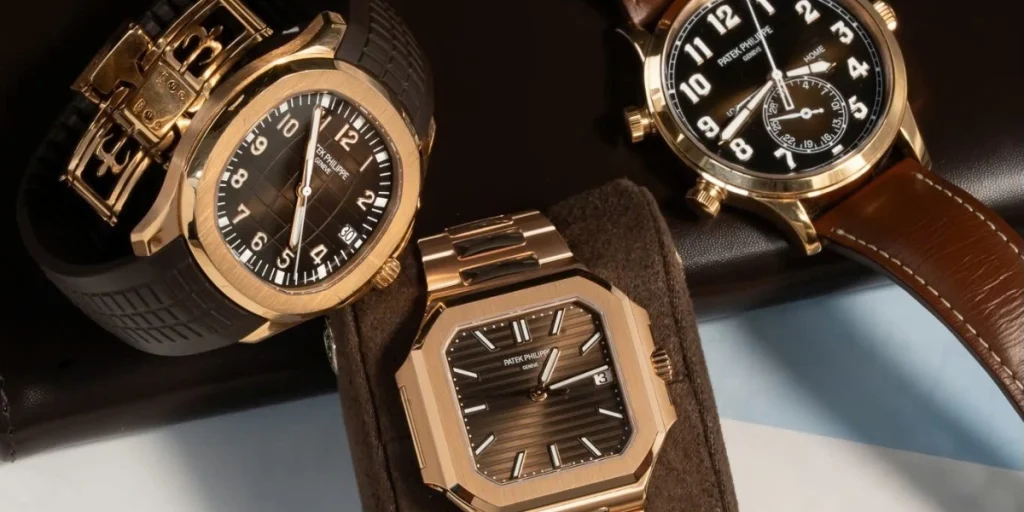
Patek Philippe is an independent luxury watch manufacturer based in Geneva, Switzerland. Since 1839, it has maintained its status at the pinnacle of high horology (Haute Horlogerie), bolstered by over 80 technical patents. The brand’s unrivaled prestige is built upon three pillars: the fierce independence of the Stern family, the symbolic Calatrava Cross, and a commitment to limited annual production under the rigorous Patek Philippe Seal.
For collectors, selecting a Patek Philippe is an expression of lifestyle, categorized into three iconic collections: the Calatrava, the Nautilus, and Grand Complications. From an investment perspective, 7 of the 10 most expensive watches ever sold at auction bear the Patek Philippe name. However, acquiring one often requires building a profile through a sophisticated allocation and waiting list system.
Within the “Holy Trinity” or “Big Three” of Swiss watchmaking (Patek Philippe, Rolex, Audemars Piguet), Patek Philippe distinguishes itself through its generational heritage and superlative artisanal hand-finishing.
What establishes the unrivaled status of the Patek Philippe watch brand?
According to research by Kronos Luxury Timepieces, Patek Philippe’s dominance stems from three core foundations: a steadfast philosophy of independence since 1839, the historically profound Calatrava Cross, and a strict production limit of approximately 55,000 pieces per year.
How did Patek Philippe’s origins and philosophy of independence begin?
Patek Philippe was founded in Geneva in 1839, with the most significant turning point occurring in 1932 when the brand was acquired by the Stern family following the 1929 stock market crash. The company has remained under the family’s ownership ever since – a rarity in the industry.
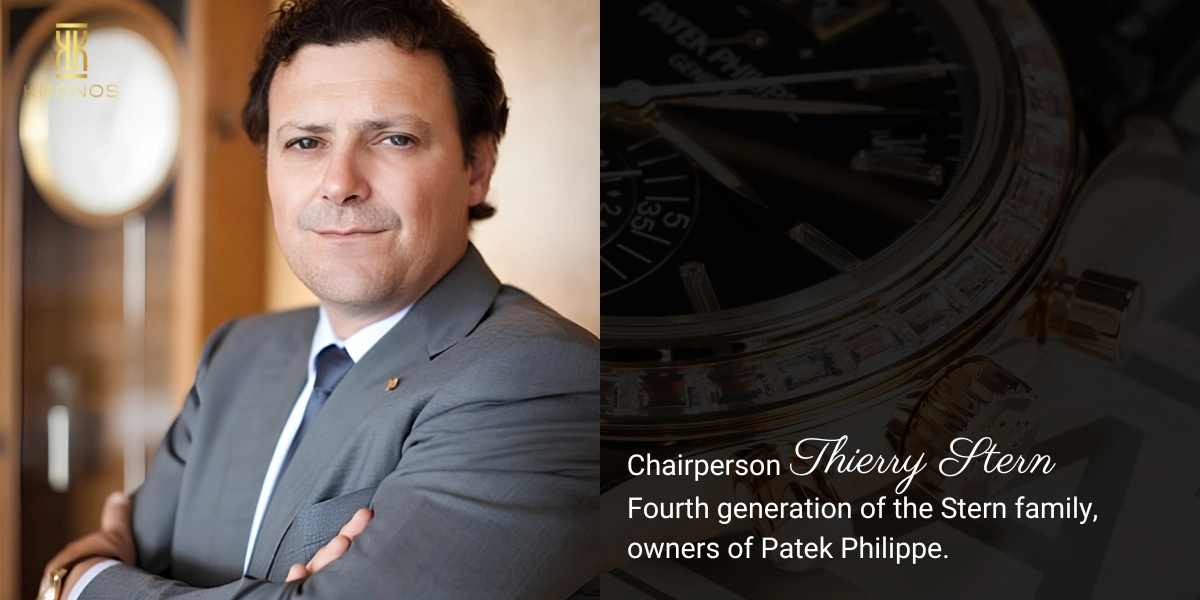
Patek Philippe has remained independently owned by the Stern family since 1932
At the heart of its identity is an unwavering commitment to independence. Patek Philippe has consistently declined acquisition and merger offers from major luxury conglomerates such as LVMH, Richemont, and Swatch Group. This decision has allowed the company to retain complete control over every aspect of its design, production, and long-term vision.
Its independence enables the brand to focus on advancing the highest standards of watchmaking without the pressure of meeting short-term financial expectations from external shareholders. Today, Patek Philippe holds more than 80 patents and develops all of its highly complicated mechanical movements entirely in-house, reflecting its enduring pursuit of technical excellence.
What is the significance of the Calatrava cross symbol on the watch?
The Calatrava Cross is Patek Philippe’s iconic emblem, formed by four fleur-de-lis motifs arranged in the shape of a cross. The symbol originates from the coat of arms of a medieval order of knights, carrying deep historical and religious significance.
From a design perspective, the fleur-de-lis has long been associated with purity and nobility. When placed on a Patek Philippe timepiece, it embodies the brand’s unwavering commitment to exceptional craftsmanship and uncompromising quality.
This dedication is reflected in every detail – from hand-polished movement components to the intricate Côtes de Genève decoration and meticulously chamfered edges, each finished under magnification to achieve the highest standards of haute horlogerie.
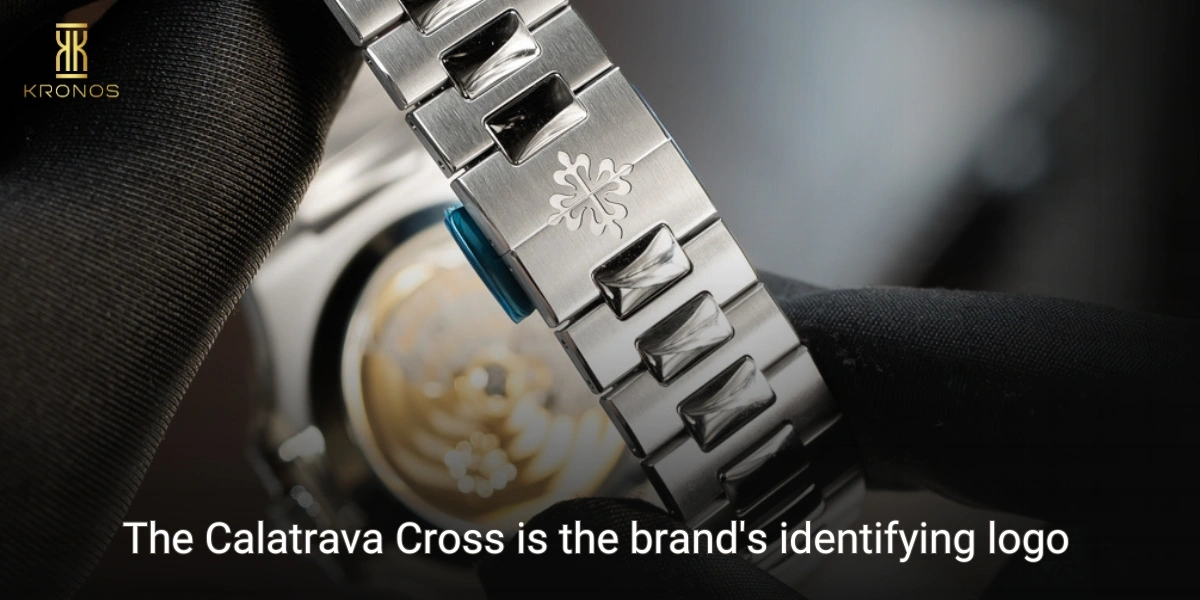
The Calatrava Cross is a Patek Philippe symbol that holds historical and religious significance
Why is every Patek Philippe timepiece so rare?
Patek Philippe intentionally limits its annual production to approximately 55,000 timepieces, preserving the exclusivity and long-term value of every creation. By comparison, this represents only about 5% of Rolex’s estimated annual output of one million watches, creating a significant imbalance between supply and demand.
A second key factor is the extraordinary time required for production. As most finishing processes are performed by hand, even an entry-level model can take close to a year to complete, while highly complicated timepieces may require more than two years of meticulous craftsmanship.
Before leaving the manufacture, every watch must meet the exacting standards of the Patek Philippe Seal – the brand’s proprietary certification, widely regarded as even more rigorous than the Geneva Seal issued in Switzerland.
The combination of strictly limited production and uncompromising craftsmanship is what makes every Patek Philippe timepiece exceptionally rare, highly collectible, and deeply valued by enthusiasts around the world.

Patek Philippe manufactures watches at a modern production facility
How do you choose the right Patek Philippe collection?
According to Kronos Luxury Timepieces, selecting the right Patek Philippe collection ultimately depends on your lifestyle and the way you intend to wear your timepiece. The Calatrava embodies timeless elegance, the Nautilus is designed for those with a dynamic, sporty spirit, while the Grand Complications collection is reserved for connoisseurs who appreciate the highest level of horological craftsmanship.
Who is the Calatrava designed for?
The Calatrava is the quintessential dress watch, created for individuals who value understated elegance and enduring tradition. With its refined round dial, ultra-thin case crafted from precious metals, and genuine alligator leather strap, it has long been the preferred choice of discerning professionals and business leaders who favor sophistication over ostentation.
The Calatrava is built upon the principle of minimalism. Its dial typically displays only the hours, minutes, and seconds, while its slim 7 – 8 mm case and clean, unadorned bezel ensure that every design element serves a clear purpose.
This timeless design language has remained remarkably consistent since the introduction of the Ref. 96 in 1932, with its round case, slender hands, and uncluttered dial, preserving the essence of the collection for more than nine decades.
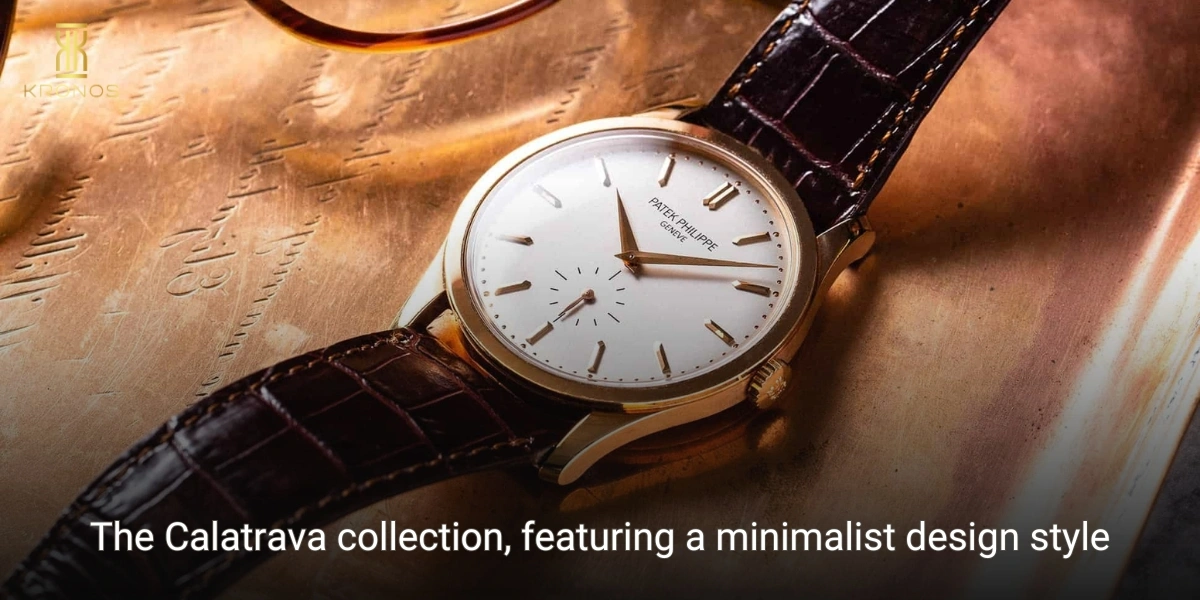
Calatrava is a line of minimalist, elegant dress watches for business professionals
Why has the Nautilus become a global icon?
Introduced in 1976, the Nautilus was designed by the legendary Gérald Genta, the visionary behind the Royal Oak for Audemars Piguet and the Ingenieur for IWC. Its distinctive 40 mm stainless steel case, inspired by the porthole of an ocean liner, redefined the concept of the luxury sports watch.
The Nautilus seamlessly combines a water resistance of 120 meters (12 ATM) with exceptional hand-finishing. Alternating satin-brushed and mirror-polished surfaces elevate the stainless steel case to a level of craftsmanship rarely seen in sports watches, establishing a new benchmark for luxury sports timepieces.
Its desirability reached unprecedented heights following Patek Philippe’s decision to discontinue the Ref. 5711. As production of one of the collection’s most beloved models came to an end, demand surged while supply became increasingly scarce, transforming the Ref. 5711 into one of the most sought-after and collectible modern watches in the world.
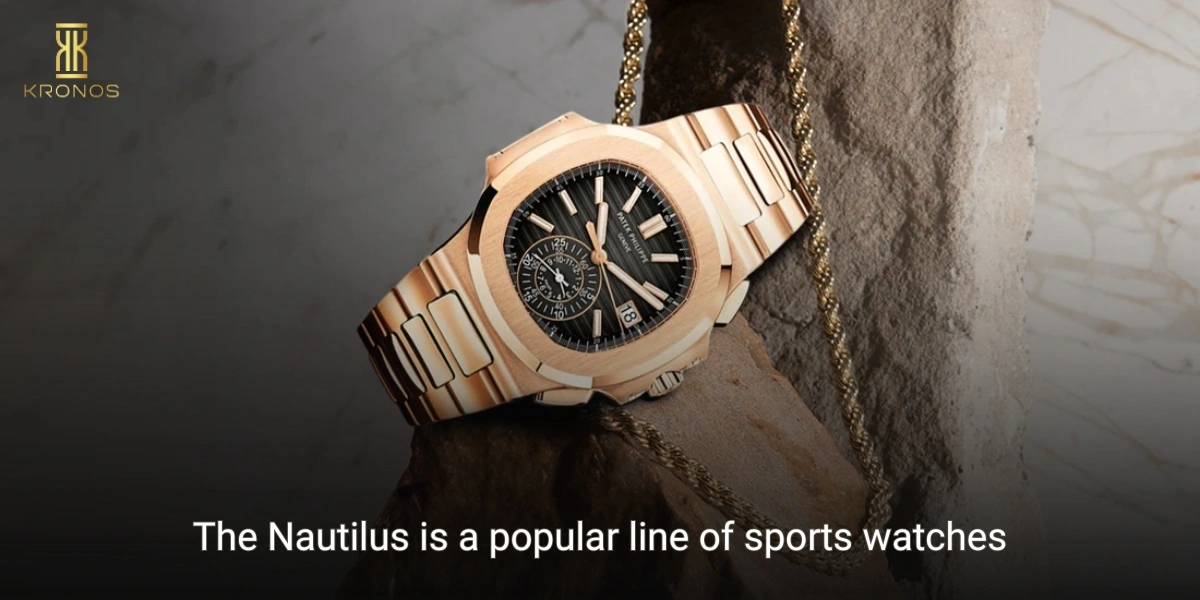
The Patek Philippe Nautilus is a luxury sports icon based on a design by Gérald Genta
Which complications define Patek Philippe’s legacy?
The Grand Complications collection represents the pinnacle of Patek Philippe’s watchmaking expertise. These exceptional timepieces incorporate three or more major complications within a single movement, showcasing the brand’s unrivaled technical mastery. Among the most celebrated are the Perpetual Calendar, the Minute Repeater, and the World Time complication.
To illustrate their sophistication, the Perpetual Calendar automatically accounts for the varying lengths of each month – including February in leap years – and remains accurate without manual adjustment until the year 2100. The Minute Repeater, meanwhile, chimes the hours, quarters, and minutes on demand, a mechanism so intricate that watchmakers may spend between 200 and 300 hours on the tuning and acoustic adjustment alone.
It is this seamless fusion of mechanical complexity and refined aesthetics that has cemented Patek Philippe’s reputation as one of the world’s greatest watchmakers. Throughout its history, the manufacturer has introduced groundbreaking achievements, including the first wristwatch created for a woman and numerous pioneering complications that continue to shape the art of haute horlogerie.
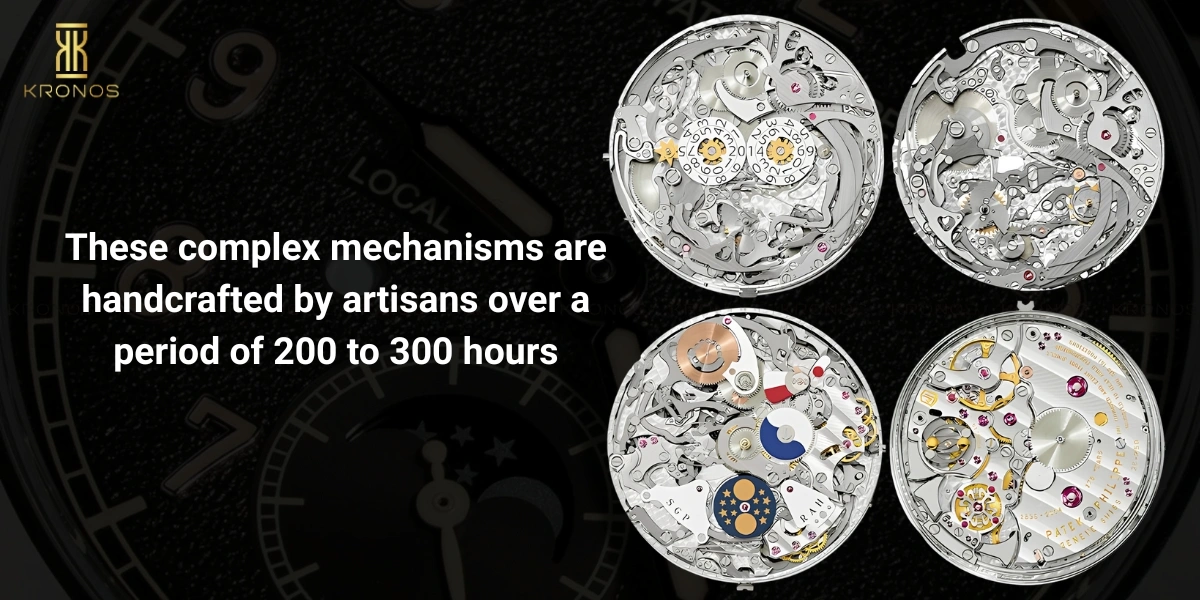
Grand Complications represent the pinnacle of Patek Philippe’s mechanical complexity
What does it take to own an authentic Patek Philippe?
Owning a Patek Philippe is more than a purchase, it is a journey that involves understanding the factors behind its value and navigating the brand’s highly selective acquisition process, which often includes waiting lists at authorized retailers.
What determines the price of a Patek Philippe?
Four key factors influence the value of a Patek Philippe timepiece: the materials used, the complexity of the movement, the reference number, and the watch’s long-term value retention.
The first is the choice of materials, with precious metals such as solid gold and platinum commanding higher prices. The second is the mechanical complexity of the movement, as sophisticated complications require significantly greater expertise and craftsmanship. The reference number also plays an important role, with certain models being produced in extremely limited quantities or holding particular historical significance.
Finally, Patek Philippe’s exceptional ability to retain – and in many cases appreciate – its value further contributes to its desirability among collectors.
From an investment perspective, Patek Philippe continues to dominate the world’s most prestigious watch auctions. As of 2024, seven of the ten most expensive watches ever sold at auction were created by the manufacturer. The record belongs to the Grandmaster Chime Ref. 6300A-010, which achieved 31 million Swiss francs at the Only Watch charity auction in 2019.
For many of the brand’s most sought-after references, ownership is not simply a matter of purchasing power. Buyers are often required to establish a relationship with an authorized retailer and join a waiting list, making the acquisition process itself part of the exclusivity that defines Patek Philippe.
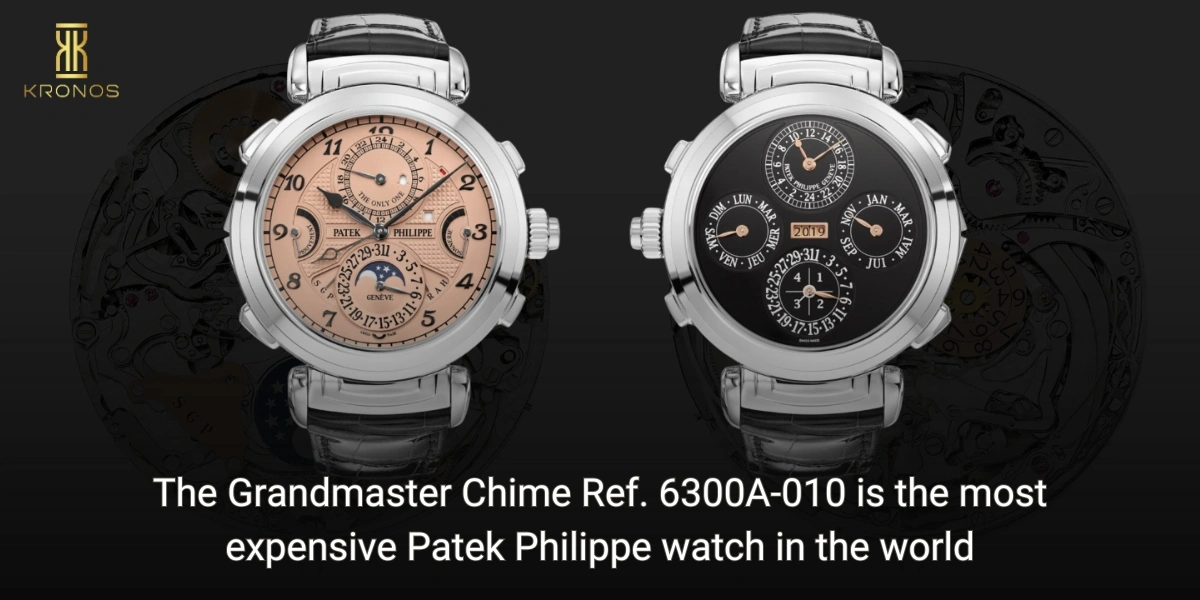
The Grandmaster Chime Ref. 6300A-010 was successfully auctioned in 2019
A clear illustration of Patek Philippe’s long-term value can be seen in the Calatrava collection. A Calatrava that sold for approximately USD 300 in the 1950s may be valued at well over USD 20,000 today.
However, such appreciation is closely tied to the watch’s originality and completeness. Timepieces that retain their original components, accompanied by their Certificate of Origin and complete documentation, command significantly stronger values in both the collector and auction markets, as these documents establish the authenticity and provenance of each watch.
How does Patek Philippe’s waiting list work?
For Patek Philippe’s most sought-after models, having the financial means to purchase one does not necessarily guarantee immediate ownership. The brand operates a highly selective allocation system, requiring prospective buyers to demonstrate a genuine, long-term relationship with the manufacture.
To be considered for allocation, clients typically establish their purchase history through authorized retailers and show a sincere passion for collecting rather than a purely commercial interest. Factors such as loyalty to the brand, collecting history, and the availability of specific references may all influence the allocation process.
This rigorous approach reflects Patek Philippe’s commitment to preserving the exclusivity, integrity, and long-term value of its timepieces worldwide. By working closely with an authorized retailer, collectors can gain a clearer understanding of the acquisition process and the path toward owning their desired Patek Philippe timepiece.
How does Patek Philippe compare with Rolex and Audemars Piguet?
Each brand within the Swiss watchmaking “Big Three” occupies a distinct position, and the choice should be based on the values one cherishes most. Patek Philippe defines itself through the art of hand-finishing and a legacy of multi-generational heritage. Rolex focuses on durability and widespread recognizability. Audemars Piguet prioritizes unconventional design and a spirit of innovation.
What precautions help preserve the value of a Patek Philippe over time?
Three key practices help maintain the long-term value of a Patek Philippe: verifying authenticity when purchasing outside official channels, following proper winding and servicing procedures, and avoiding conditions that may damage the movement.
What should buyers consider when purchasing a Patek Philippe outside official channels?
When buying on the secondary market, the most important step is to verify the watch’s authenticity and provenance. Today, highly sophisticated 1:1 counterfeit watches exist, and some pre-owned pieces have been fitted with non-original components, particularly the dial, hands, or movement. Identifying these issues often requires specialized expertise.
Many buyers also underestimate the importance of the original accessories and documentation. A watch that is missing its original lacquered presentation box and certificate of authenticity may lose approximately 10 – 20% of its resale value in the secondary market. For greater peace of mind, it is advisable to purchase through authorized dealers or reputable auction houses.
If considering a secondary-market purchase, having the watch inspected by an independent expert is a worthwhile investment.
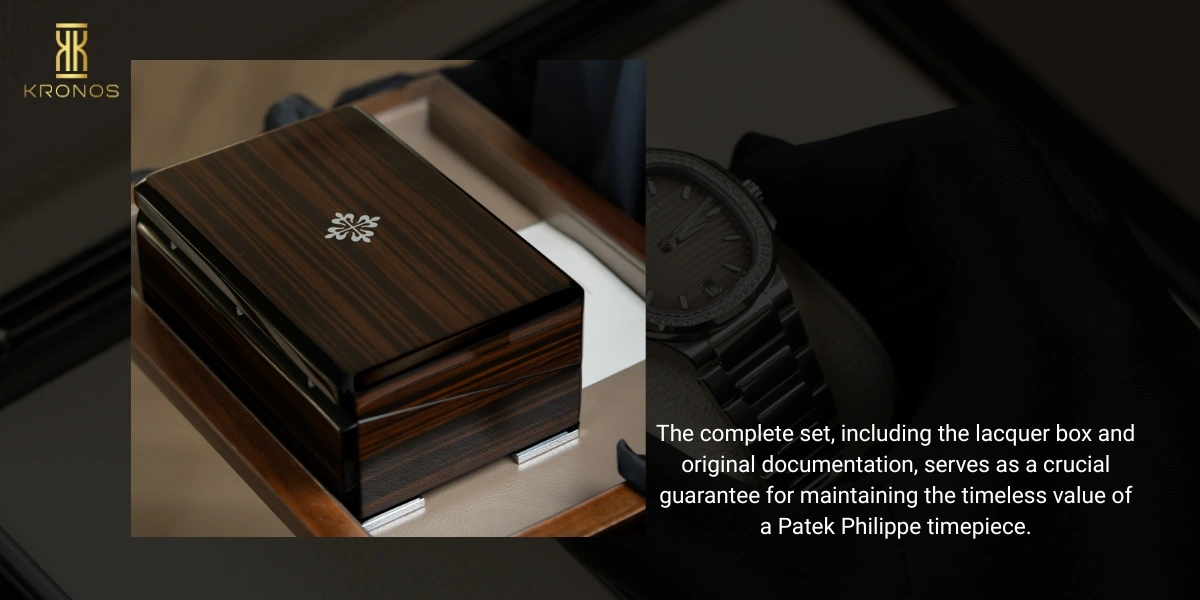
Buyers should thoroughly check for all accessories when purchasing a Patek Philippe outside of authorized channels
How should a mechanical movement be wound and serviced according to expert recommendations?
Proper handling is essential to ensure a mechanical movement performs reliably for generations. For manually wound models, the crown should be turned according to the number of rotations recommended in the owner’s manual. Avoid overwinding, as excessive force may damage the mainspring.
Routine servicing by an authorized service center is equally important. Over time, the lubricants inside the movement gradually deteriorate, typically after 3 – 5 years of regular use, increasing friction between pivots and gears. Periodic maintenance removes accumulated residue and replenishes fresh lubricants, helping preserve the movement’s accuracy and long-term reliability.
When should you remove your Patek Philippe to protect the movement?
A Patek Philippe should be removed in three situations: when exposed to water, during high-impact sports, and when near devices that generate strong magnetic fields.
For dress watches fitted with alligator leather straps, prolonged exposure to water should be avoided, as natural leather is not designed for humid environments.
Likewise, activities such as golf or tennis can subject the movement to repeated shocks, potentially affecting delicate components such as the balance wheel and hairspring. It is also advisable to keep the watch away from strong magnetic sources – including Bluetooth speakers, tablets, and magnetic bag clasps – as prolonged exposure can adversely affect the watch’s timekeeping performance.
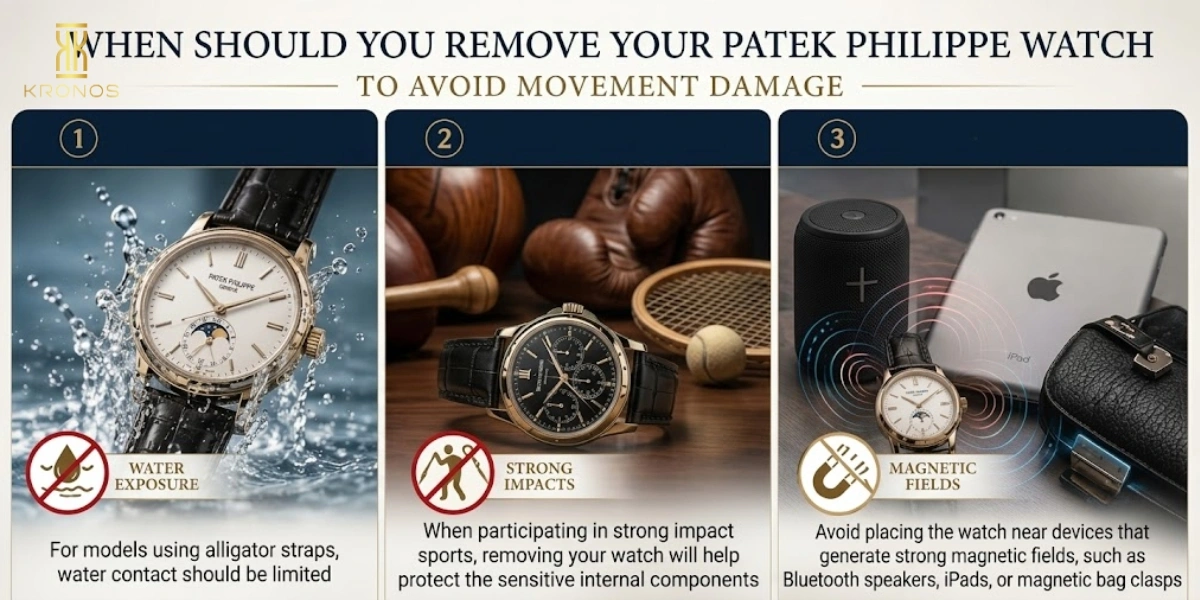
Situations to avoid when using a Patek Philippe watch
(FAQ) Frequently asked questions about Patek Philippe watches
1. When and where was Patek Philippe founded?
Founded in 1839, Patek Philippe is an independent Swiss luxury watch manufacturer. Since 1932, the company has remained under the ownership of the Stern family, preserving its tradition of independence and long-term vision.
2. How many watches does Patek Philippe produce each year?
Patek Philippe limits its annual production to approximately 55,000 watches—around 5% of Rolex’s output. This carefully controlled production helps preserve the brand’s exclusivity, craftsmanship, and rarity.
3. What does the Calatrava Cross symbolize?
The Calatrava Cross is Patek Philippe’s signature emblem, formed by four fleur-de-lis arranged in the shape of a cross. Inspired by the coat of arms of a medieval order of knights, the symbol carries deep historical and religious significance, representing purity, honor, and the enduring values of the brand.
4. How can you join the waiting list for a Patek Philippe?
To be considered for a Patek Philippe waiting list, clients typically need to establish a long-term relationship with an authorized retailer and demonstrate a genuine passion for collecting rather than purchasing for resale. Factors such as purchase history, social standing, and the financial ability to acquire one or more Patek Philippe timepieces may all be taken into account.
For collectors who prefer not to wait, the reputable secondary market offers an alternative path to immediate ownership. At Kronos Luxury Timepieces, clients can explore a carefully curated selection of authentic Patek Philippe watches, each thoroughly inspected for authenticity and condition, allowing them to acquire their desired timepiece without the uncertainty of an extended waiting period.