No products in the cart.
View collectionGlobal luxury watch brand rankings: What is the ultimate elite choice?
A three-tier ranking of the world's luxury watch brands. Join Kronos Luxury Timepieces to explore valuation criteria and discover the perfect timepiece for your personal style.
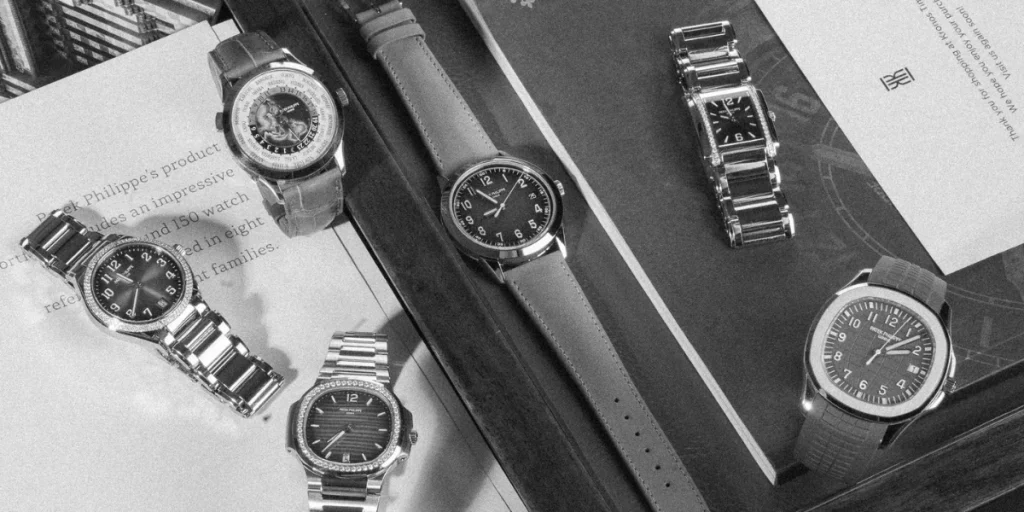
Kronos Luxury Timepieces analyzes the global rankings of luxury watch brands, offering an objective perspective for both seasoned collectors and newcomers. The value of a high-end timepiece is crystallized from four key elements: brand heritage, artisanal craftsmanship, the mechanical movement, and the use of rare materials such as 18K solid gold, 950 platinum, and diamonds.
The market is segmented into three tiers: entry-level, iconic high-end, and ultra-luxury, with leading Swiss brands often required to achieve COSC or Geneva Seal certification. The pinnacle is occupied by the “Holy Trinity” of Patek Philippe, Vacheron Constantin, and Audemars Piguet. The mainstream iconic group includes Rolex, Cartier, and Omega, while Longines, Frederique Constant, and Grand Seiko are ideal for newcomers.
What defines a luxury watch brand?
A luxury watch brand is a manufacturer with a history spanning 100 years or more, possessing the capability to design and produce complex mechanical “in-house movements” rather than using mass-produced components.
These brands represent the pinnacle of artisanal craftsmanship, with each piece undergoing rigorous quality control processes and being personally finished to the finest detail by master artisans.
Timepieces from these luxury brands serve three roles: as collectible assets with appreciating value, as symbols of social status, and as heirlooms that preserve value across generations.
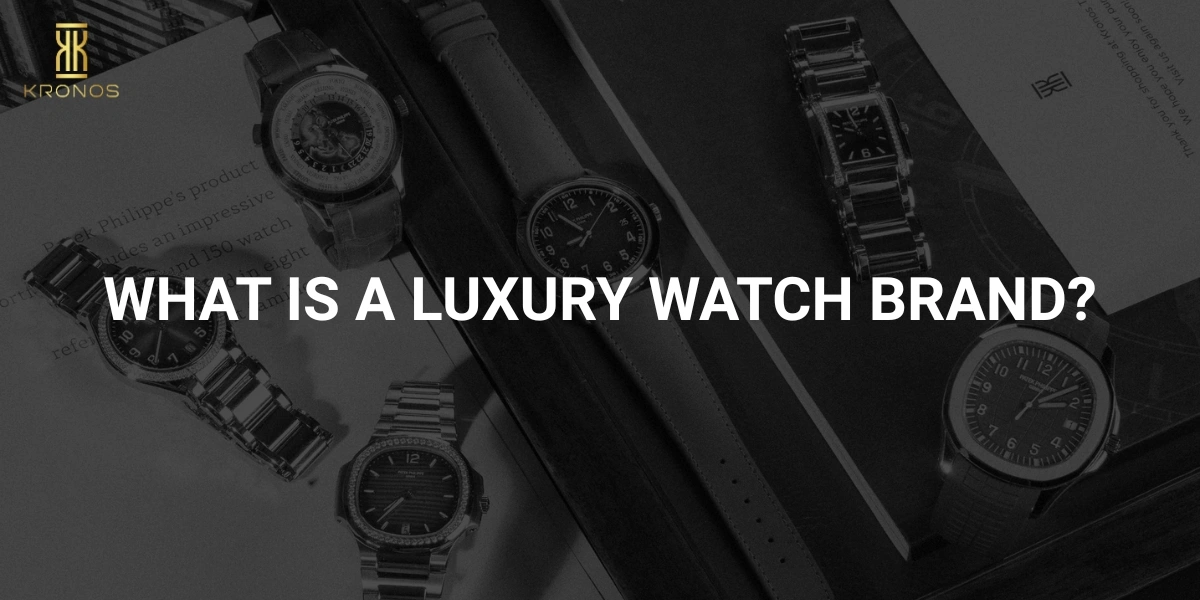
A luxury watch brand is a legacy of artistry and a symbol of prestige
What are the 4 factors that create the heritage value and high price of a luxury watch?
According to Kronos Luxury Timepieces, rather than being a mere time-telling instrument, the value of a luxury watch lies in the convergence of the world’s most exacting technical standards. To command prices in the millions of dollars, each piece must meet four criteria:
- Complexity of the mechanical movement: Leading luxury brands design and manufacture their own movements with an accuracy standard of -4 to +6 seconds per day (COSC standard). A mechanical movement contains 200 to 600 components moving in synchrony, whereas a high-end Quartz movement achieves an accuracy of just ±10 seconds per year.
- Artisanal hand-finishing: Artisans polish, chamfer, and engrave every detail by hand under a microscope. Common finishing techniques include Côtes de Genève (Geneva stripes), perlage (circular graining), and mirror polishing. The finishing process can take from 200 to over 1,400 hours.
- Exclusive and rare materials: Beyond 18K gold, 950 platinum, and diamonds, brands research and develop proprietary materials. For example, Richard Mille uses NTPT Carbon (ultra-light, at just 1.4 g/cm³), Hublot developed Magic Gold (a scratch-resistant gold alloy), and Omega created Ceragold (ceramic fused with gold). These modern materials enhance durability by 3 to 5 times compared to conventional steel while significantly reducing weight.
- Legacy and generational value: Luxury watches are designed with a lifespan exceeding 50 to 100 years when properly serviced every 3 to 5 years. This heritage factor allows many luxury models, especially limited editions and discontinued lines, to become assets with appreciating value.
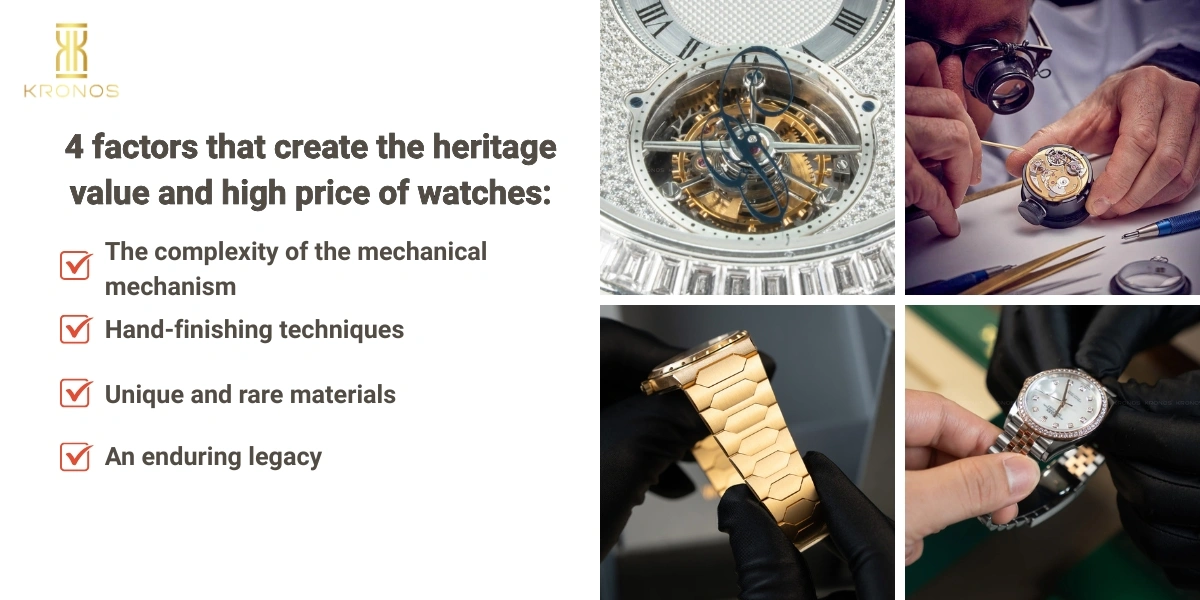
The movement, craftsmanship, materials, and heritage forge the value of a luxury watch brand
How is the luxury watch market segmented?
The market is typically divided into three main groups: the accessible entry-level segment, the popular and iconic high-end segment, and the ultra-luxury segment reserved for an elite clientele passionate about complex mechanical art.
These three segments are structured by increasing price points and decreasing production volume. The entry-level segment accounts for the largest volume, with production in the hundreds of thousands of pieces annually. The iconic segment features globally recognized brands with controlled production. The ultra-luxury segment has limited production, from a few dozen to a few hundred pieces per model each year.
Beyond reputation, objective certifications play a decisive role in shaping pricing and brand hierarchy. High-end Swiss brands are often required to meet stringent standards such as COSC (Contrôle Officiel Suisse des Chronomètres) or the Geneva Seal, which attest to their accuracy and the quality of their hand-finishing.
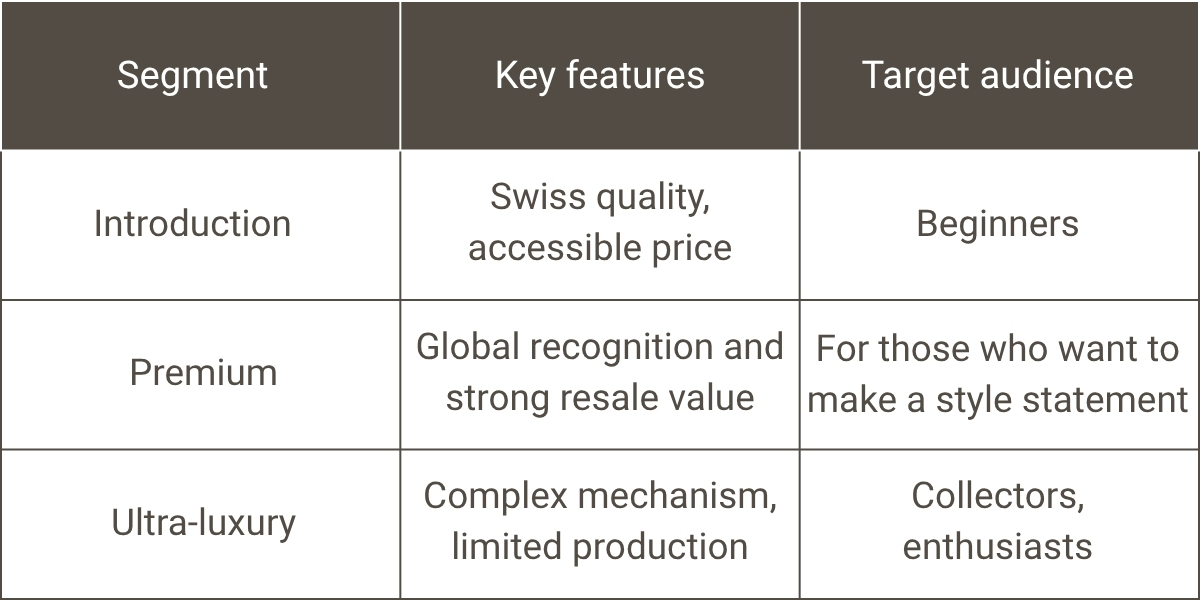
A chart illustrating the segmentation of high-end watch brands
How are the world’s luxury watch brands ranked?
The ranking is divided into three tiers based on craftsmanship and brand positioning: the “Holy Trinity” at the apex, the mainstream iconic group, and the group suitable for newcomers.
Which brands form the “Holy Trinity,” representing the pinnacle of Swiss watchmaking?
The “Holy Trinity” is the title bestowed by collectors upon the three brands with the longest histories and highest watchmaking prowess: Patek Philippe (1839), Vacheron Constantin (1755), and Audemars Piguet (1875). All three develop 100% of their movements in-house, hold hundreds of patents, and meet the finishing standards of the Geneva Seal (Poinçon de Genève) – the highest in the Swiss industry.
Patek Philippe often leads the list. Its Grandmaster Chime (REF. 6300A) is a clear testament to the brand’s mastery, integrating 20 complex functions, holding six patents, and requiring 1,400 components to assemble.
Vacheron Constantin, founded in 1755, has been in continuous operation for over 270 years, surviving the French Revolution and two World Wars. It is the world’s oldest watch manufacturer in continuous operation. Audemars Piguet, on the other hand, is distinguished by its innovative spirit. Its Royal Oak model, with its octagonal bezel and exposed screws, redefined the concept of the luxury sports watch.
All three brands are headquartered in Switzerland, a nation that accounts for over 50% of the global value of watch exports (according to the Federation of the Swiss Watch Industry, 2025) and has been the epicenter of mechanical watchmaking since the 16th century.
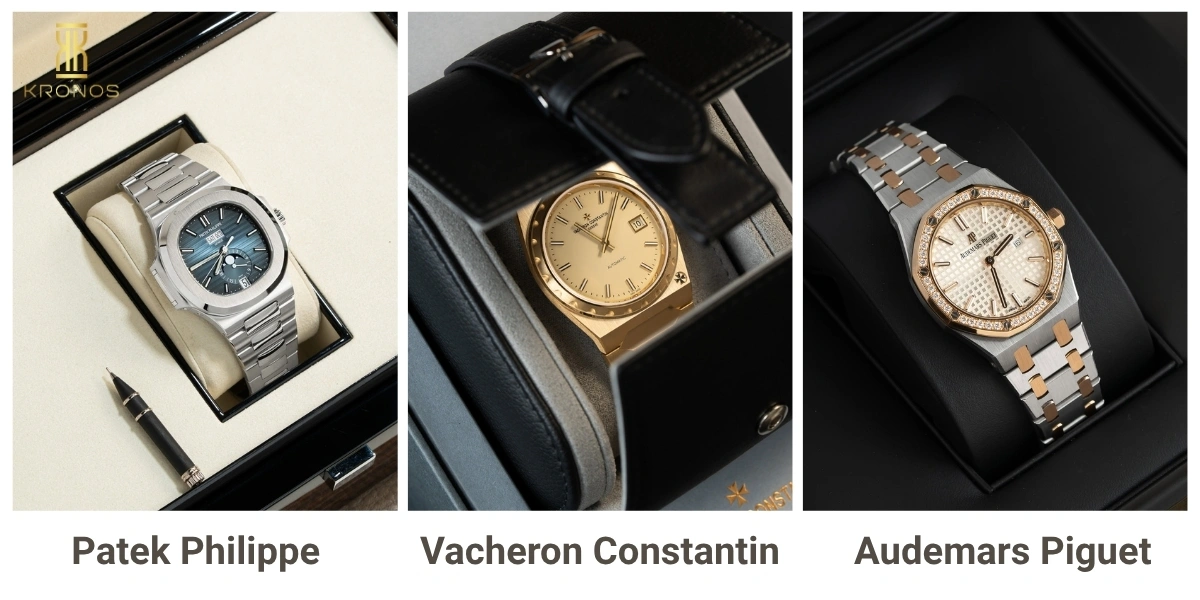
The top three brands include Patek Philippe, Vacheron Constantin, and Audemars Piguet
Which luxury watch brands have the highest global recognition?
Based on a compilation by Kronos Luxury Timepieces, Rolex, Cartier, and Omega are the three luxury brands with the highest global recognition, according to the Brand Finance Luxury & Premium rankings (2025). Although outside the “Holy Trinity,” these brands command superior sales and popularity due to their powerful brand-building strategies.
Rolex is the most prominent in this group. The brand’s crown logo has adorned the wrists of famous figures like Winston Churchill, Paul Newman, and Roger Federer. It occupies approximately 30% of the market share in the Swiss luxury watch industry (Morgan Stanley, 2024). Furthermore, the exceptional value retention and profitability of iconic models like the Daytona and Datejust are major advantages.
Cartier, founded in Paris in 1847, is renowned for its high-jewelry design aesthetic. The Santos (launched in 1904) was the first men’s wristwatch in history. Its Tank model became a fashion icon, with a design inspired by WWI tanks.
Omega also boasts an impressive heritage. Since 1932, the brand has been the Official Timekeeper for the Olympic Games and the choice of NASA astronauts since the Speedmaster conquered the moon in 1969. This legacy tied to historic events helps these brands maintain stable commercial value; the price of the Omega Speedmaster Moonwatch on the secondary market increased by an average of 5-10% annually between 2020 and 2025.
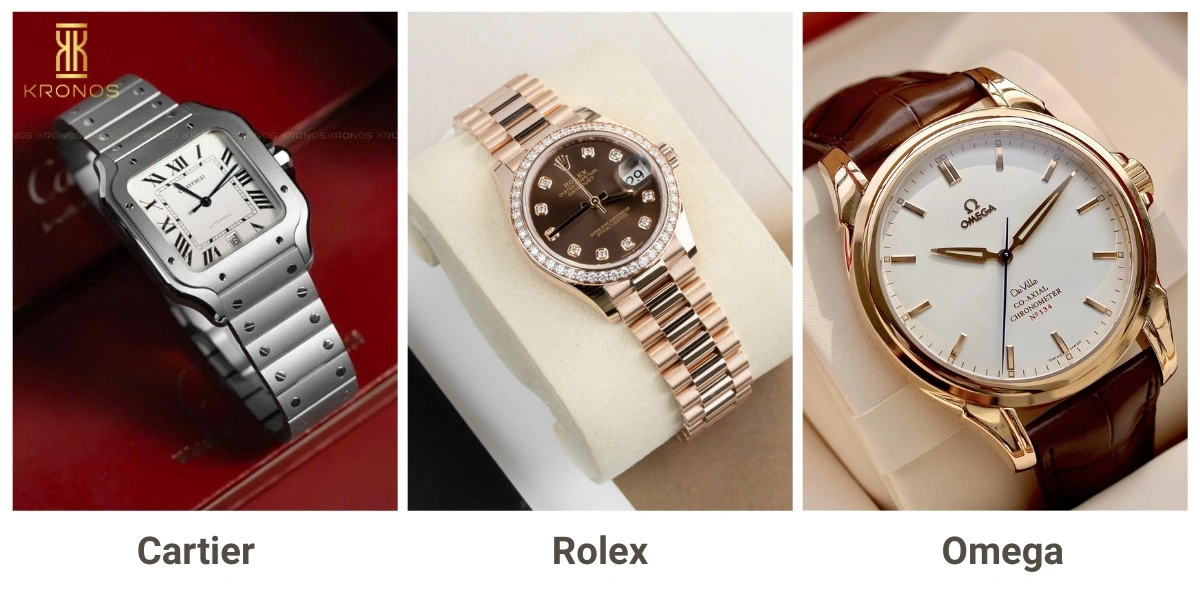
Rolex, Omega, and Cartier are highly recognized icons of luxury watches
Which luxury watch brand should a newcomer start with?
Newcomers should consider Longines, Frederique Constant (Swiss), or Grand Seiko (Japanese) – three brands that balance quality craftsmanship with an accessible budget. Their prices typically range from $1,000 to $5,000 (approx. 25 – 125 million VND), which is 60-80% lower than the iconic segment.
Longines, established in 1832 in Saint-Imier, Switzerland, embodies classic elegance. Its representative collections include the Master Collection (sophisticated), HydroConquest (300m sports diver), and DolceVita (fashion-forward), suitable for both professional and formal settings.
Frederique Constant (founded 1988, Geneva) is distinguished by its in-house manufactured movements at a starting price point of $1,200. This is a reasonable entry point into the world of Swiss mechanical watches. Its Classics Heart Beat line, with its open-aperture dial, is the brand’s most popular choice.
Another noteworthy option from Japan is Grand Seiko. The brand is famous for its own stringent accuracy standards (a deviation of ~3 seconds/day for the Spring Drive movement, ~1 second/day for the 9F Quartz) and its Zaratsu finishing technique – a manual polishing method that creates a mirror-like, distortion-free surface, requiring 36 man-hours per piece.
For a newcomer, the priority should be a balance between movement quality and budget – this provides a solid foundation for building a long-term collection and accumulating knowledge of mechanical timepieces.
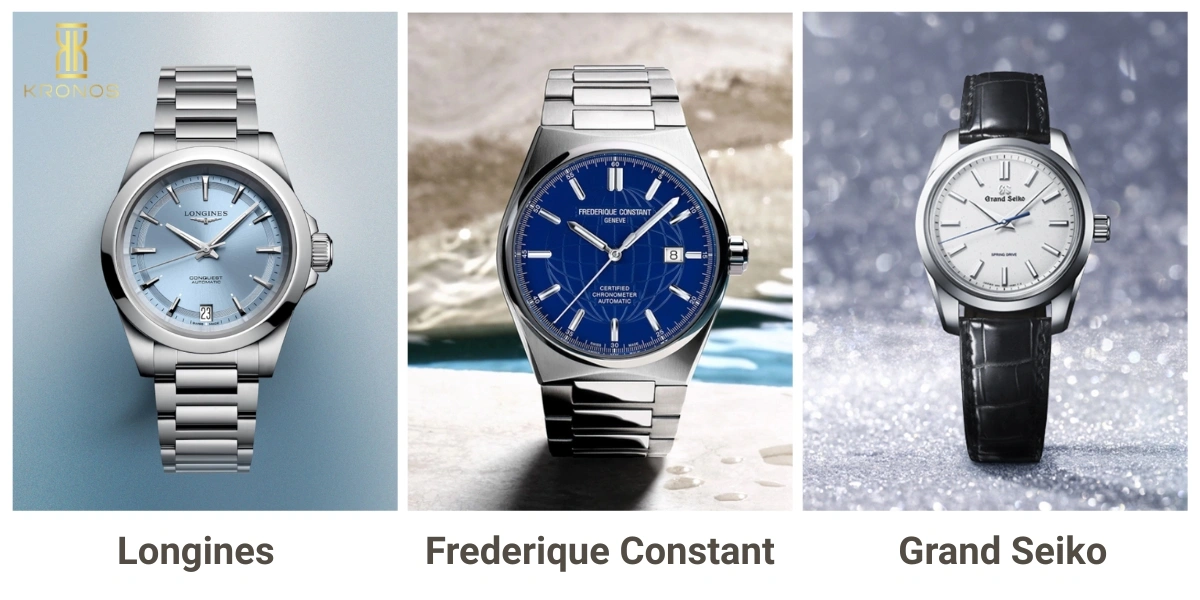
Longines, Frederique Constant, and Grand Seiko are ideal starting points for newcomers
What criteria determine the investment cost of a luxury watch?
The investment cost of a luxury watch depends on five criteria, each influencing the final price differently: case material, crystal quality, movement complexity, exclusivity, and brand heritage.
- Case material: Watches with 316L stainless steel cases have the most accessible price point. 18K solid gold versions (yellow, rose, or white gold) are typically 3 to 5 times more expensive. Platinum 950 versions can cost 5 to 10 times more than the same model in steel.
- Crystal quality: Most high-end watches are fitted with a sapphire crystal. This material scores 9/10 on the Mohs hardness scale (second only to diamond), offering effective scratch resistance in daily use and maintaining clarity throughout its lifespan.
- Movement complexity: Complicated movements featuring mechanisms like a Tourbillon, Perpetual Calendar, or Minute Repeater require 500 to 2,000 hours of assembly and adjustment by a watchmaker with over 10 years of experience.
- Exclusivity and limited editions: Limited supply is a direct driver of price appreciation on the secondary market. For example, the Rolex Daytona REF. 116500LN trades at a premium of 80 – 120% over its official retail price.
- Heritage and brand story: Patek Philippe and Rolex sell not just timekeeping instruments, but a legacy of appreciating value. According to the Knight Frank Luxury Investment Index (2024), collectible watches have appreciated by an average of 89% over the last 10 years.
Where is a trusted destination to acquire a luxury watch?
According to Kronos Luxury Timepieces, there are three reliable channels for acquiring a luxury watch: authorized dealers, reputable grey market sellers, and specialized retailers like Kronos Luxury Timepieces.
Authorized Dealers (ADs)
Purchasing from an AD offers maximum peace of mind with a 2 – 5 year international warranty and a complete set of official documents (box, papers, warranty card). However, buyers often face long waiting lists or are required to build a “purchase history” by buying other items to be offered highly sought-after models.
The Grey Market
This channel allows you to acquire your desired watch immediately without waiting, which is particularly useful for models with a 1 to 3 year waitlist at ADs. In return, this route requires buyers to have solid authentication knowledge or to choose a transparent and reputable dealer to avoid the risks of counterfeits and price inflation.
What is the Kronos Luxury Timepieces experience?
Located in District 1, Ho Chi Minh City, Kronos Luxury Timepieces is a specialized destination for collectors of Rolex, Patek Philippe, Audemars Piguet, and more. With a luxurious ambiance and a multilingual, knowledgeable team, Kronos offers a professional and discreet purchasing process:
- Comprehensive authentication: Rigorous inspection of the movement’s condition, original papers, and 100% verification of provenance for every timepiece before a transaction.
- Sourcing rare models: Assistance in sourcing limited editions or discontinued models upon request.
- Secure delivery: Flexible, insured nationwide shipping solutions for high-value transactions.
- Professional after-sales service: Periodic maintenance, movement lubrication, and case polishing according to manufacturer standards.
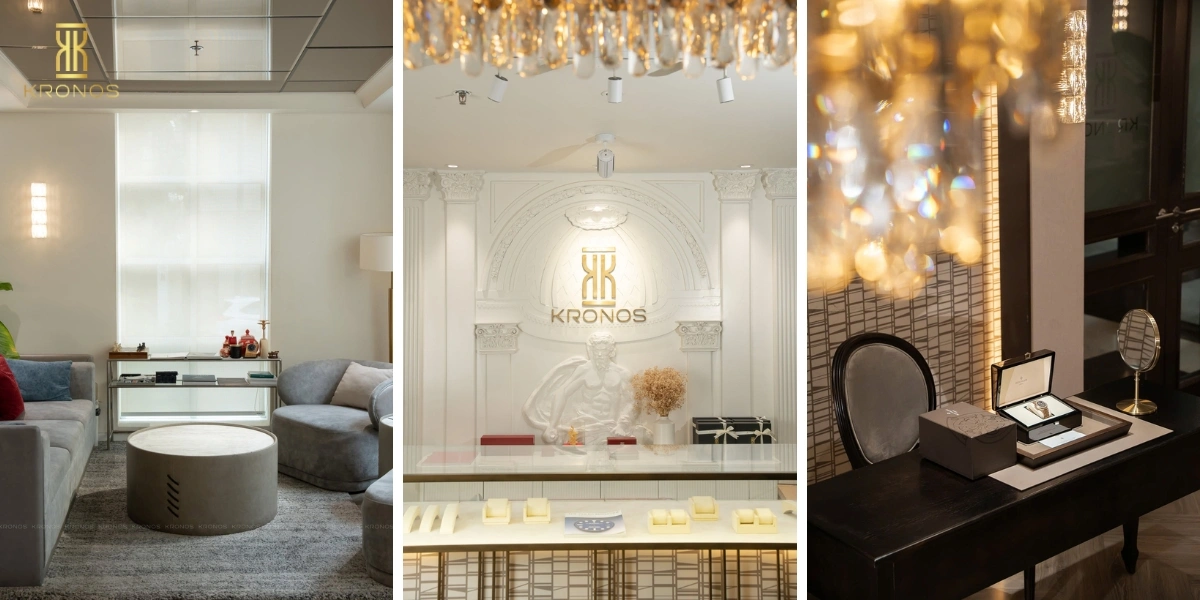
Kronos Luxury Timepieces: A trusted destination for watch collectors
The world of luxury watches is a multifaceted landscape with a diverse hierarchy, from accessible entry points to the zenith of horological art. Each brand possesses its own philosophy and story, creating distinct values for its owner. Ultimately, the most suitable timepiece balances three factors: personal style (classic, sporty, or minimalist), purpose (daily wear, formal events, diving, collecting), and investment budget (from $1,000 to over $40,000).
Should you desire a more in-depth consultation or wish to experience our collections firsthand, the team of experts at Kronos Luxury Timepieces is always prepared to provide one-on-one advice and assist you with authentic collections from Rolex, Patek Philippe, Audemars Piguet, and more.
Schedule an appointment via our hotline at 0922 2222 39 – 0901 487 878 or visit our website to receive a detailed analysis of the timepiece that best suits your style and budget.