
No products in the cart.
View collectionDecoding the Cartier legacy: Why has the maison earned the trust of royalty and the global elite?
Discover Cartier, the prestigious jewellery Maison trusted by royalty since 1847. Explore its iconic masterpieces and learn how to purchase authentic Cartier creations with confidence.
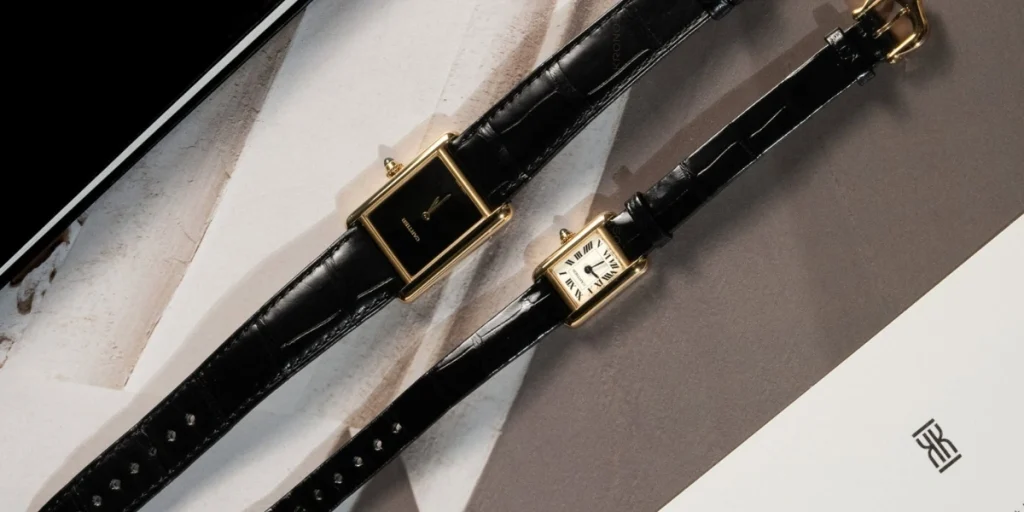
Cartier is a prestigious luxury jewellery Maison founded by Louis-François Cartier in Paris in 1847. Throughout its history, the brand has received official patronage from more than 15 royal households worldwide, including those of the United Kingdom, Spain and Thailand.
In the early 20th century, King Edward VII of England bestowed upon Cartier the title “Joaillier des Rois”, or “Jeweller of Kings,” together with an official Royal Warrant, ushering in a golden era for the Maison.
Cartier’s extraordinary legacy is reflected in historic masterpieces such as the Patiala Necklace, created in 1928 with approximately 2,930 diamonds, and the celebrated engagement ring associated with Princess Grace Kelly. The Maison further distinguishes itself through its pioneering use of platinum, exceptional savoir-faire and enduring design icons such as the Panthère motif and the Santos watch, introduced in 1904.
The price of Cartier jewellery reflects its heritage, meticulous craftsmanship and elite positioning within the luxury market. In some cases, the retail price may be three to five times higher than the intrinsic value of the gold and gemstones alone.
Compared with Tiffany & Co. or Bvlgari, Cartier possesses a more classical identity, closely associated with French royal authority and refinement. To purchase with confidence, buyers should choose official boutiques, request complete certificates of authenticity and protect each creation from chemical exposure.
How did Cartier’s history lead the maison into royal circles?
Cartier entered royal circles through its exceptional craftsmanship and the patronage of Princess Mathilde in 1856, followed by the recognition of King Edward VII of England in the early 20th century. Louis-François Cartier founded the Maison in Paris in 1847. Within less than ten years, members of the French aristocracy had already become loyal clients.
What historic title did King Edward VII bestow upon Cartier?
In the early 20th century, King Edward VII of England honoured Cartier with the title “Joaillier des Rois”, or “Jeweller of Kings,” together with an official Royal Warrant. This prestigious recognition helped Cartier establish relationships with more than 15 European royal households over the following two decades.
The title was accompanied by official patronage from the British Royal Family. Cartier subsequently received 14 additional Royal Warrants from royal courts across Europe, the Middle East and Asia.
The foundation established by Louis-François Cartier in 1847 had already attracted the attention of the Parisian aristocracy. Public recognition from a reigning monarch significantly strengthened the jeweller’s reputation and credibility among the European elite of the period.
Royal Warrants are official documents issued by royal households. They are granted only to suppliers that have successfully met the highest standards of quality and service following a rigorous evaluation process.
Cartier began building relationships with the aristocracy in 1856, only nine years after the Maison was founded. That year, Princess Mathilde, cousin of Emperor Napoleon III, became Cartier’s first prominent aristocratic client.
Her commissions introduced Cartier to an influential network within Parisian high society, including noble families and members of the diplomatic community. This strong aristocratic client base later paved the way for the Maison’s first major international expansion: the opening of its London branch in 1902.
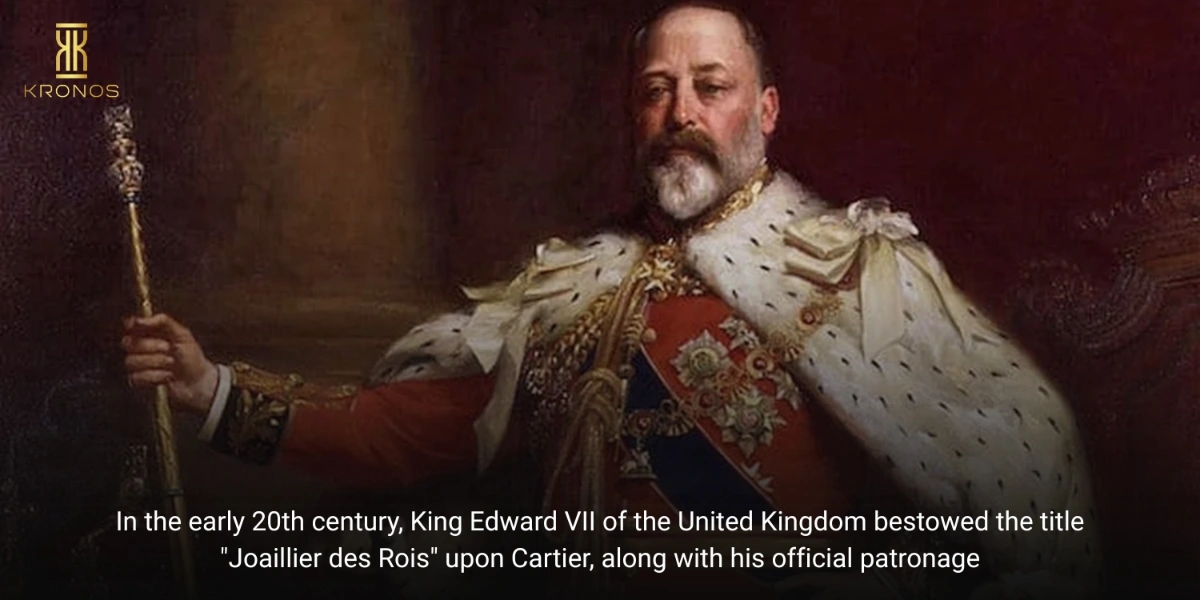
“Joaillier des Rois” is the historic title bestowed upon Cartier by King Edward VII
Which Cartier masterpieces bear the strongest royal and historical significance?
Kronos Luxury Timepieces presents three of Cartier’s most significant royal masterpieces: the Patiala Necklace of 1928, Grace Kelly’s engagement ring of 1956 and the tiara associated with Queen Elisabeth of Belgium, created in 1910. According to the Cartier Archives, each of these creations is closely connected to an important event or prominent figure in royal history.
- The Patiala Necklace: Created in 1928 as a private commission for the Maharaja of Patiala in India, this extraordinary masterpiece featured approximately 2,930 diamonds with an estimated total weight of 962 carats, equivalent to around 192 grams. It remains one of the largest and most ambitious jewellery creations in Cartier’s 177 year history.
- Grace Kelly’s Engagement Ring: In 1956, Prince Rainier III of Monaco presented Grace Kelly with a Cartier engagement ring set with a 10.47 carat diamond. Publications such as Vogue, Life Magazine and Paris Match have continued to feature the ring since 1956, transforming it into an enduring symbol of royal romance for nearly seven decades.
- Queen Elisabeth of Belgium’s Tiara: Created in 1910 from platinum and diamonds, the tiara reflects Cartier’s distinctive Garland style. King Albert I presented the jewel to Queen Elisabeth in 1912. It later appeared at numerous important Belgian royal occasions and became one of the most celebrated tiaras in the history of the Maison.
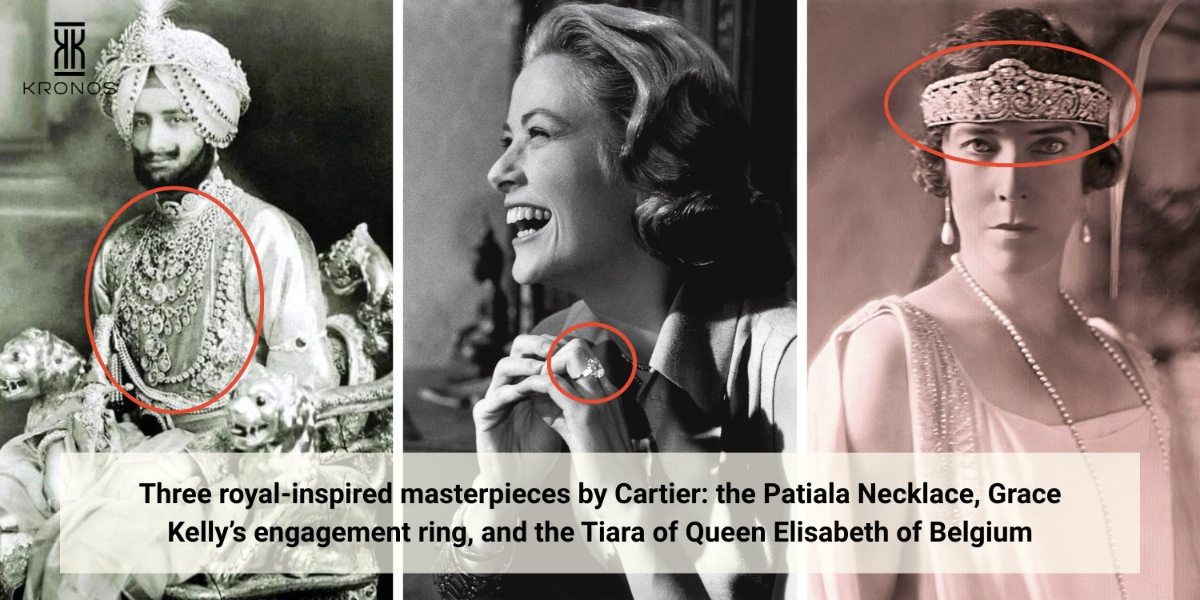
Three royal-inspired masterpieces that helped Cartier cement its status
One of the key factors behind Cartier’s global stature was the vision of the founder’s three grandsons. Louis, Pierre and Jacques Cartier played pivotal roles in the Maison’s international expansion, bringing Cartier to London in 1902, New York in 1909 and subsequently to major markets across Asia.
This international expansion strategy, implemented between 1902 and 1909, enabled Cartier to serve elite clients across three of the world’s leading financial centres in the early 20th century, while establishing a prestigious transcontinental network of customers.
Which materials and craftsmanship techniques set Cartier apart?
Cartier distinguishes itself through three defining elements: its pioneering use of platinum, the Serti Vibrant gemstone-setting technique and an uncompromising commitment to savoir-faire in every detail.
In the late 19th century, Cartier became one of the first French jewellery houses to introduce platinum into high-jewellery creation, at a time when most European jewellers primarily worked with gold and silver. This decision helped transform high-jewellery design throughout the 20th century, as platinum gradually replaced gold as the preferred setting for diamond jewellery.
Platinum has a hardness of approximately 4 to 4.5 on the Mohs scale, compared with only 2.5 to 3 for gold. This allows artisans to create exceptionally delicate settings, sometimes as fine as 0.3 millimetres, while still securing the diamonds firmly in place. Platinum’s naturally pure white lustre also enhances the clarity, brilliance and fire of diamonds more effectively than a yellow-gold setting.
Cartier’s innovative spirit extends beyond jewellery. In 1904, the Maison created the Santos de Cartier at the request of aviation pioneer Alberto Santos-Dumont. The Musée des Arts Décoratifs in Paris recognises it as one of the world’s earliest wristwatches designed for men.
In addition, Cartier’s philosophy of savoir-faire, or mastery of craftsmanship, determines the exceptional quality and finishing of every creation. Each Haute Joaillerie piece may require several hundred to more than 1,500 hours of meticulous handcraftsmanship by skilled artisans in the Maison’s Parisian workshops.
One of Cartier’s most remarkable techniques is the Serti Vibrant, which allows gemstones to move subtly with the wearer’s movements, creating a dynamic and captivating sparkling effect. Even in its 18-karat gold collections, Cartier applies Haute Joaillerie finishing standards to every diamond facet and setting, achieving a level of craftsmanship comparable to that of its platinum creations.
By 2025, Cartier continued to pursue innovation through the [SUR]Naturel Haute Joaillerie collection, incorporating three-dimensional gemstone-setting techniques and ultra-lightweight titanium. According to the Group’s annual report, Richemont, Cartier’s parent company, recorded approximately EUR 20.6 billion in global revenue for the 2024 financial year.
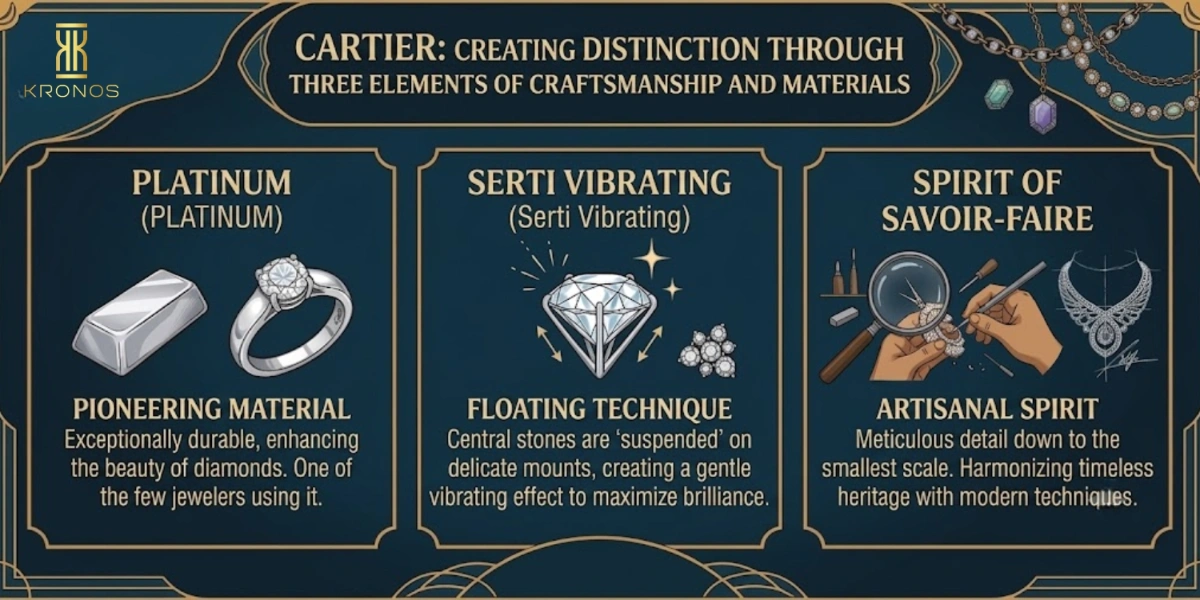
Cartier employs pioneering materials and expert craftsmanship to create a distinctive difference
Which Cartier heritage design icons are most sought after by connoisseurs?
When exploring Cartier with Kronos Luxury Timepieces, three heritage design icons stand out as particularly desirable among collectors: the Panthère motif, the Tutti Frutti style and the art of Secret Watches.
- Panthère de Cartier: The panther motif first appeared in Cartier’s design language in 1914, symbolising strength, freedom and commanding elegance. It has become one of the Maison’s most recognisable signatures across more than 20 Cartier collections.
- Tutti Frutti: This distinctive jewellery style features coloured gemstones carved into floral and botanical forms, drawing inspiration from Indian art. Tutti Frutti creations frequently achieve exceptional prices at international auctions. For example, a Cartier Tutti Frutti bracelet dating from 1930 sold for USD 2.16 million at Christie’s in 2020. The combination of carved rubies, sapphires and emeralds gives the style its unmistakable and highly distinctive identity.
- Secret Watches: These creations represent a sophisticated fusion of fine watchmaking and high jewellery, with the dial discreetly concealed within an ornamental design. Each Secret Watch may require more than 800 hours of craftsmanship. The dial is typically hidden beneath a hinged mechanism or gemstone-set cover and is revealed only when the wearer activates the opening system.
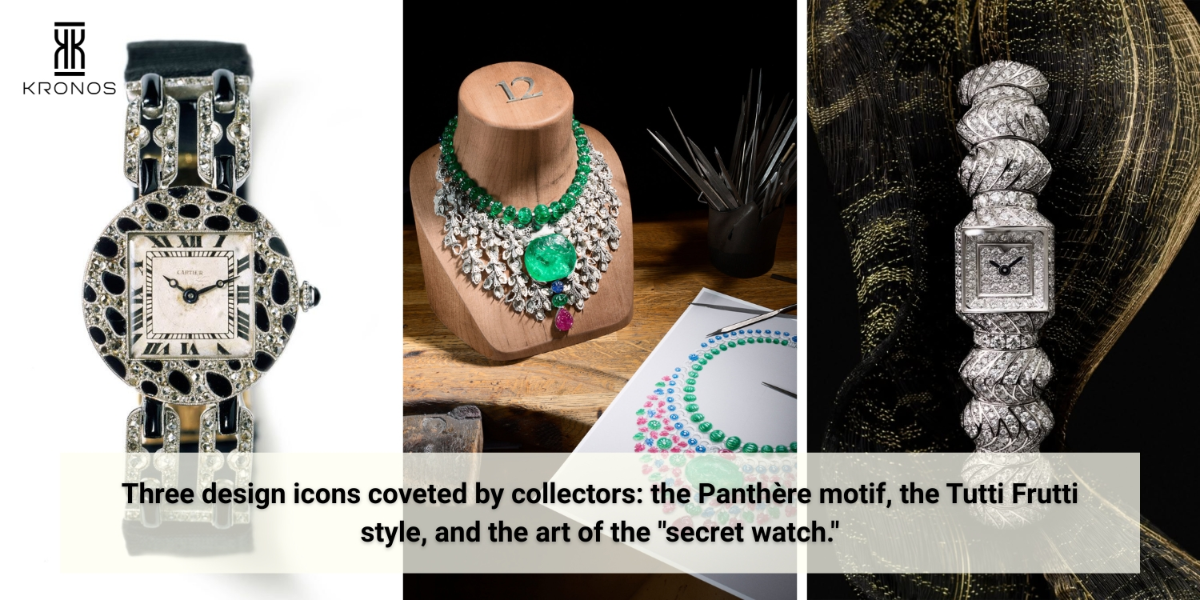
Three iconic Cartier designs
What is the practical value and investment potential of owning Cartier jewellery?
Cartier jewellery holds investment value for three principal reasons: a heritage accumulated over 177 years, exceptional savoir-faire and a prestigious position within the Haute Joaillerie segment. The following sections examine the key components that contribute to its value and compare Cartier with other leading luxury jewellery houses.
Why is Cartier jewellery priced far above the intrinsic value of its gold and gemstones?
The value of a Cartier creation is composed of four main elements: precious materials such as gold, platinum and diamonds; highly specialised handcraftsmanship; historical significance accumulated over many decades; and the Maison’s reputation within the luxury market.
Owning a Cartier creation therefore means acquiring more than a piece of jewellery. It also means possessing an object with recognised artistic, historical and cultural value.
For example, an 18-karat gold Cartier Love ring may be priced at approximately USD 2,000 to USD 2,500, equivalent to around VND 50 million to VND 60 million, while the intrinsic value of the gold itself may account for only approximately 20% to 30% of the listed retail price.
To provide a clearer perspective, the table below breaks down the principal components that contribute to the value of a high-jewellery creation:
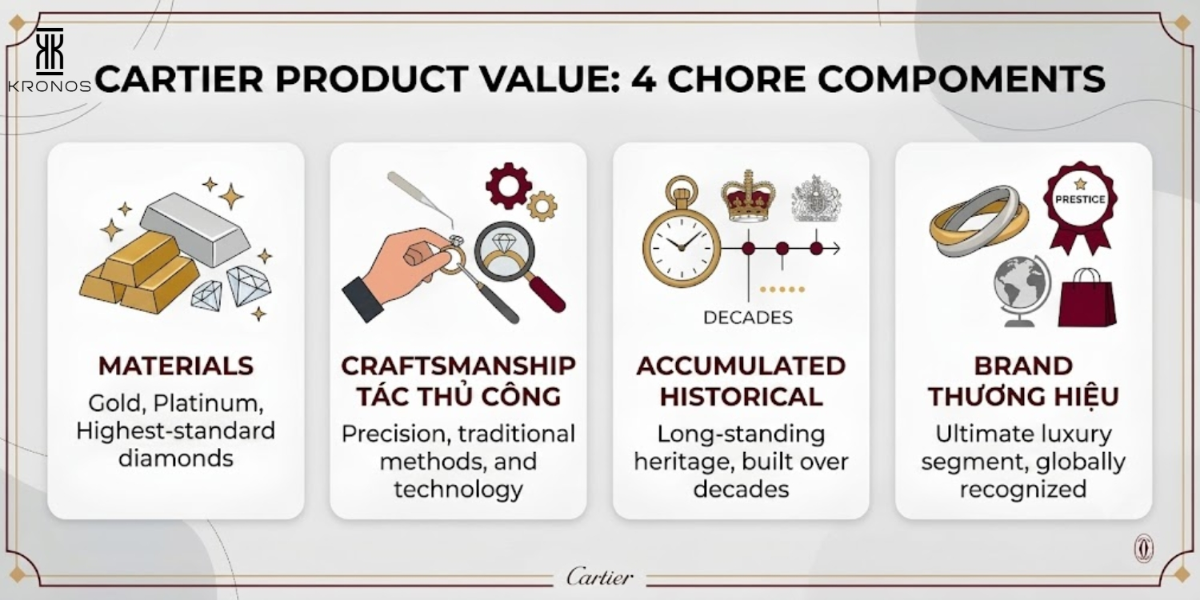
4 factors that make Cartier an expensive brand in the world of luxury goods
Even the red leather-clad box plays a role in the brand value experience – much like Hermès’ orange bag or Tiffany’s blue box.
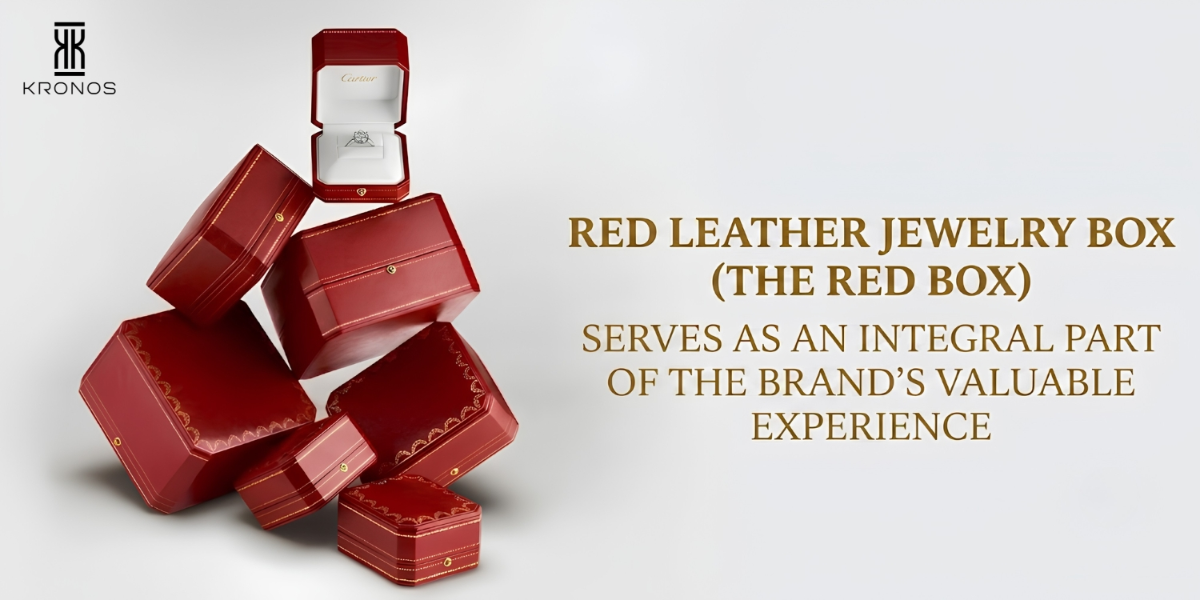
The red leather-covered box is also a key element of brand identity associated with Cartier
What is Cartier’s competitive advantage compared to other luxury brands like Bvlgari or Tiffany & Co.?
Cartier’s competitive advantage over Tiffany & Co. or Bvlgari lies in three key areas: its French royal heritage dating back to 1847, its classic design style, and a network of over 200 boutiques across 60 countries. The following table outlines the distinctive identity of each brand:
Cartier is recognised for its iconic classical elegance, deeply rooted in the heritage of French royalty. From the perspective of jewellery artistry and historical significance, Cartier and Van Cleef & Arpels are frequently considered by collectors seeking pieces with long-term preservation and collectible value.
According to data from Christie’s and Sotheby’s auctions, vintage Cartier jewellery often retains its value or appreciates by approximately 3% to 7% annually in the secondary market, particularly pieces from the Panthère and Tutti Frutti collections.
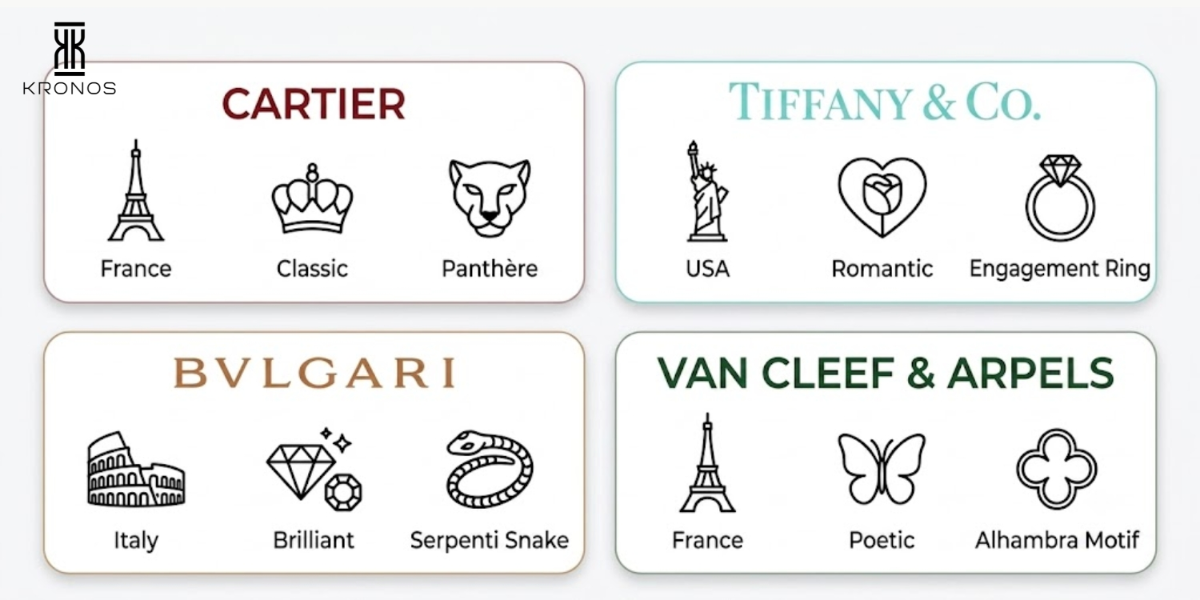
Comparing Cartier with Tiffany & Co., Bvlgari and Van Cleef & Arpels
How can buyers authenticate and ensure they are purchasing genuine Cartier jewellery?
To minimise the risk of purchasing counterfeit products, buyers should follow three essential principles: purchase only from official boutiques, verify the certificate of authenticity and cross-check the serial number engraved on the product.
The first and most important principle is to purchase exclusively from official Cartier boutiques or authorised Cartier retailers. Products acquired through official channels are supplied with authentic certification and documentation confirming the origin and specifications of the jewellery.
According to product-authentication guidance from Cartier’s After-Sales Service, part of the Richemont Group, sophisticated counterfeit products may closely imitate the overall form and appearance of an authentic Cartier creation. However, replicas are often identifiable through fine details that require a high level of craftsmanship and precision.
Cartier products can be examined through three key authentication points:
- Serial number: Authentic Cartier products feature sharp, precise and evenly executed engravings, typically measuring approximately 0.1 to 0.2 millimetres in depth. Counterfeit items often display shallow, blurred, irregular or incorrectly positioned engravings.
- Clasps and recessed logos: Examine the finishing quality of the clasp, fastening mechanism and surrounding surface. The engraved logo should be consistent in depth, alignment and spacing between characters.
- Pre-owned products: Take the item to a Cartier boutique for professional assessment, provenance verification and serial-number comparison within the available service or product records.
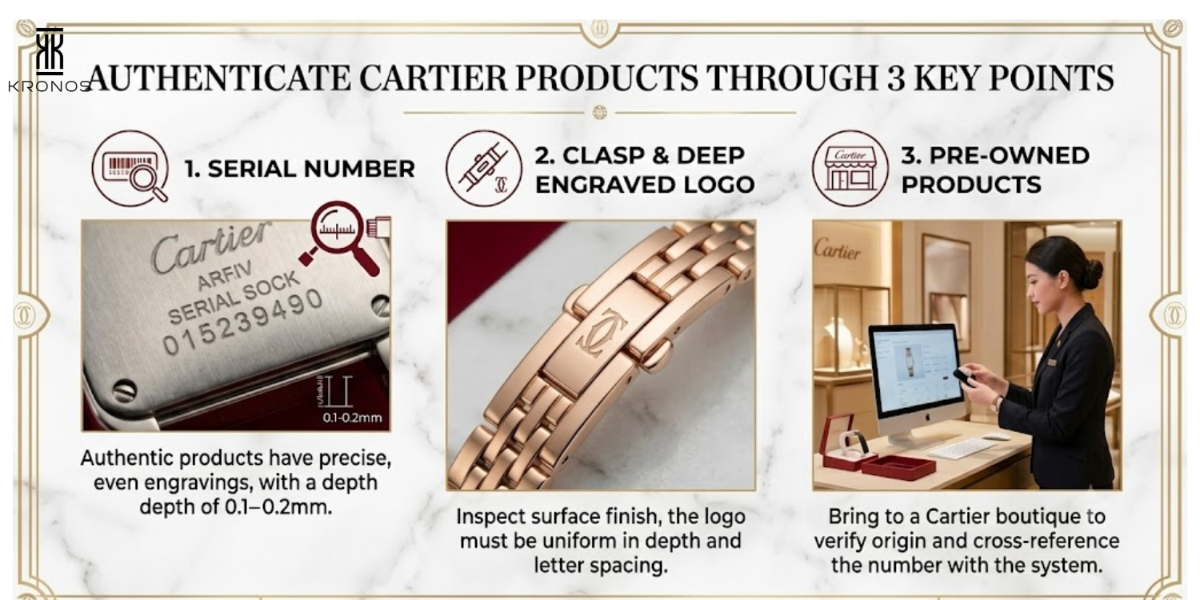
A guide to authenticating genuine Cartier products
How should Cartier jewellery be cared for to preserve its value across generations?
Kronos Luxury Timepieces recommends three essential principles for preserving Cartier jewellery: avoid exposure to chemicals such as perfume and chlorine, store each piece separately in a soft fabric pouch, and arrange professional servicing at an official boutique every six to twelve months.
The most important precaution is to minimise the jewellery’s contact with chemicals. A common issue encountered by product-care specialists is surface tarnishing or discolouration caused by spraying perfume or applying skincare products directly onto the jewellery.
Similarly, chlorine in swimming pools can gradually affect the lustre and appearance of precious metals. A recommended habit is therefore to complete all makeup, skincare and perfume application before putting on jewellery. Cartier pieces should be worn last when dressing and removed before swimming, exercising or engaging in strenuous physical activity.
For storage, each piece should be placed in a separate compartment or soft fabric pouch. Diamonds have a hardness rating of 10 out of 10 on the Mohs scale, making them the hardest gemstones. As a result, they can easily scratch softer materials such as gold, which has a hardness of approximately 2.5 to 3, or pearls, which range from approximately 2.5 to 4.5, when the pieces rub against one another.
Finally, to maintain the jewellery’s original brilliance, clients should periodically take their pieces to an official Cartier boutique for professional servicing. Trained specialists will inspect and polish the jewellery in accordance with the Maison’s technical standards, helping protect both the precious metals and gemstones throughout the maintenance process.
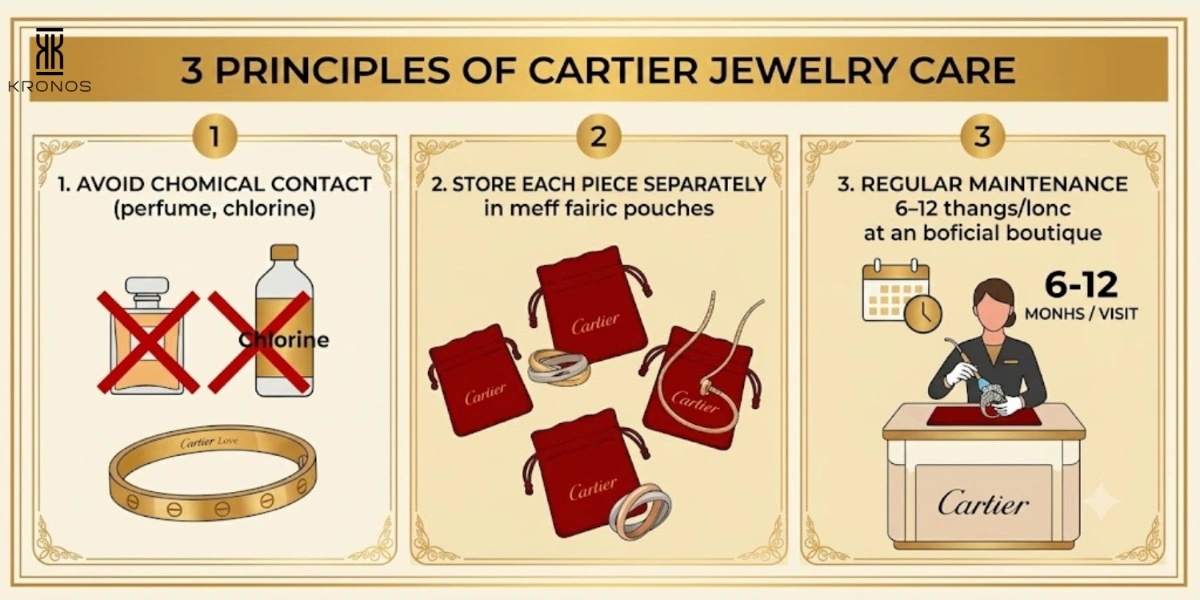
Essential tips for preserving Cartier jewellery for long-term wear
Frequently asked questions about Cartier
Which country is Cartier from?
Cartier is a French luxury jewellery Maison founded by Louis-François Cartier in Paris in 1847. Over the course of its 177-year history, the Maison has become a symbol of French royal heritage and has received official patronage from more than 15 royal households worldwide, including those of the United Kingdom, Spain and Thailand.
Which group currently owns Cartier?
Cartier is currently owned by Richemont, one of the world’s largest luxury groups, headquartered in Switzerland. Richemont reported revenue of approximately EUR 20.6 billion for the 2024 financial year, demonstrating the Group’s strong financial position and reinforcing Cartier’s global reputation within the luxury industry.
When was Cartier Santos created, and who commissioned it?
The Santos de Cartier was created in 1904 at the request of aviation pioneer Alberto Santos-Dumont. The Musée des Arts Décoratifs in Paris recognises it as one of the world’s earliest wristwatches designed specifically for men.
Does Cartier have official boutiques in Vietnam?
Yes. Cartier currently operates official boutiques in prestigious luxury shopping centres in Hanoi and Ho Chi Minh City.
However, for collectors seeking limited editions, rare heritage references or a highly personalised and in-depth advisory experience, Kronos Luxury Timepieces is a preferred destination.
At Kronos Luxury Timepieces, we offer authentic Cartier products accompanied by complete authentication documentation, dedicated after-sales service, flexible trade-in support and expert guidance on the long-term investment value of each timepiece.