No products in the cart.
View collectionAn overview of Rolex: Its history and the most investment-worthy watch collections
Explore the history of Rolex, the most investment-worthy Submariner and Daytona models, expert authentication guidance and essential maintenance practices from Kronos Luxury Timepieces.
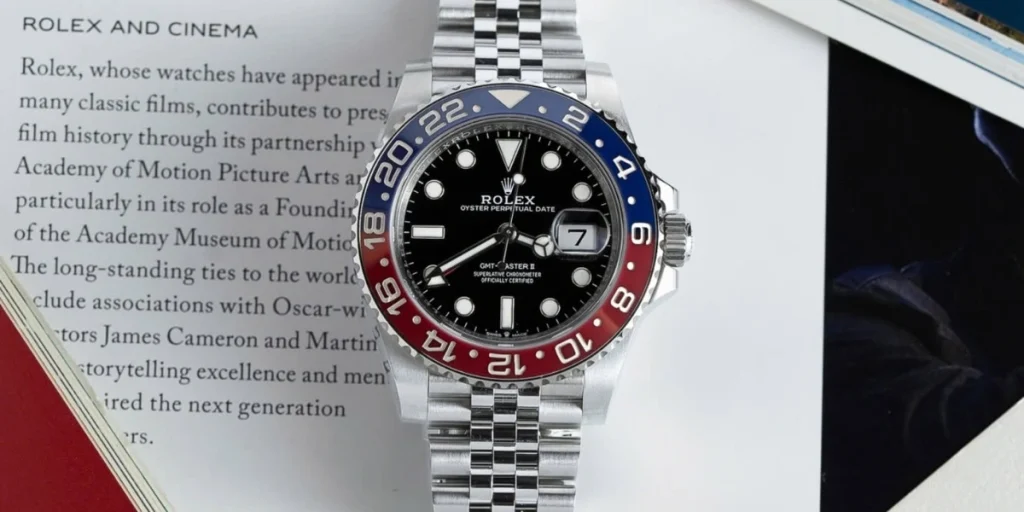
Rolex is a prestigious Swiss luxury watch brand founded by Hans Wilsdorf in 1905. The Maison is renowned for its iconic five-pointed crown emblem and its vertically integrated manufacturing process, which adheres to some of the most rigorous standards in the watchmaking industry.
This article provides a comprehensive overview of the Rolex empire, from the brand’s achievement of a Swiss Certificate of Chronometric Precision in 1910 and the introduction of the Perpetual self-winding movement in 1931 to the development of the water-resistant Oyster case and the use of 904L Oystersteel.
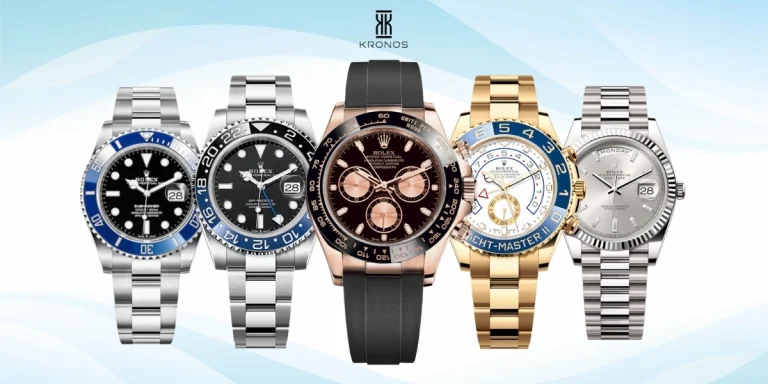
It also offers an in-depth analysis of four legendary Rolex collections: the Submariner, a professional diving watch water-resistant to 300 metres; the Cosmograph Daytona, a chronograph created for the world of motor racing; the Day-Date, the prestigious 18-karat gold timepiece commonly known as the “President’s Watch”; and the 28mm Lady-Datejust, designed specifically for women.
Kronos Luxury Timepieces also examines the value-retention potential of Rolex compared with Patek Philippe and Omega, provides expert guidance on authenticating genuine Rolex watches and avoiding so-called Frankenwatches, and explains the essential principles of maintaining an automatic mechanical movement for long-term durability and reliable performance.
Who founded Rolex, and which historical milestones built the Rolex empire?
Rolex was founded by Hans Wilsdorf in 1905, and the brand name was officially registered in Switzerland in 1908. Two milestones that helped shape the modern watchmaking industry were the award of a chronometric precision certificate in 1910 and the introduction of the Perpetual self-winding movement in 1931.
Hans Wilsdorf began his business in London before relocating the company’s headquarters to Geneva. From the outset, he pursued a vision that differed significantly from that of most watchmakers of his time. He believed that wristwatches, which were then widely regarded as less reliable than pocket watches, could achieve a level of precision comparable to that of astronomical timekeeping instruments.
In 1910, Swiss authorities awarded a chronometric precision certificate to one of the company’s wristwatches. This recognition validated Wilsdorf’s belief and marked one of the earliest occasions on which the watchmaking industry formally acknowledged the accuracy of a wristwatch.
The next milestone represented a major turning point not only for Rolex but also for the entire watchmaking industry. In 1931, the brand introduced the Perpetual self-winding movement, a mechanism that automatically winds the mainspring through the natural movement of the wearer’s wrist.
This invention later became a widely adopted standard and influenced the development of automatic movements across numerous watch brands. Establishing its manufacturing base in Switzerland, a country with more than 500 years of watchmaking tradition, further strengthened the prestige, credibility and technical reputation of every timepiece bearing the Rolex name.
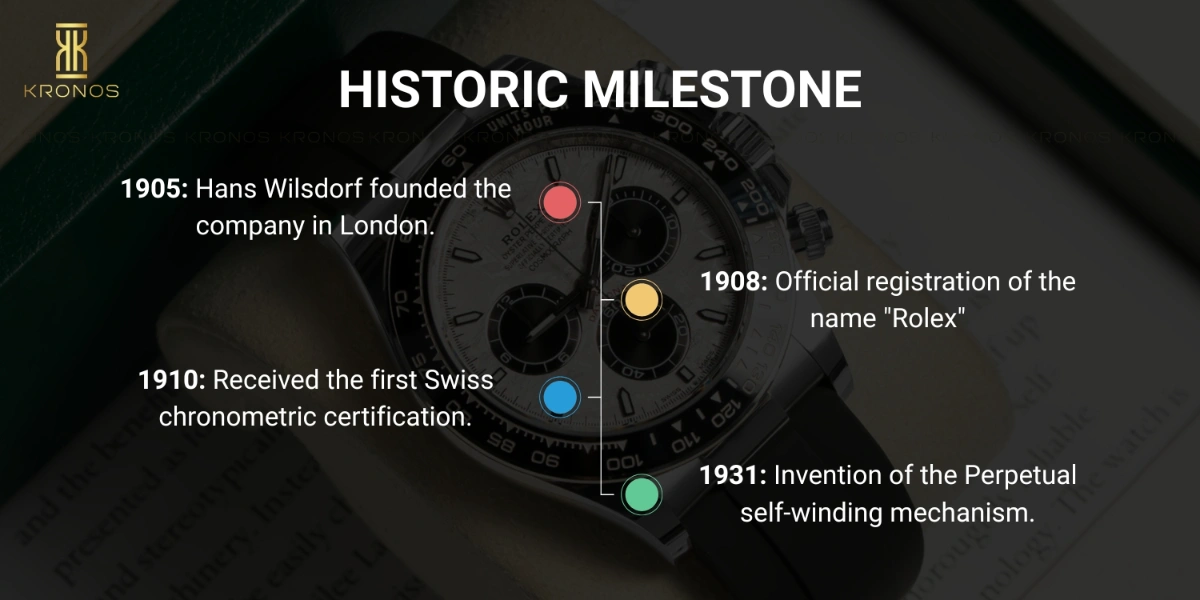
Key historical milestones in the founding of the Rolex brand
What defines the core distinction and benchmark value of a Rolex watch?
According to Kronos Luxury Timepieces, the core value of Rolex lies in its exceptional level of finishing and vertically integrated manufacturing capabilities. From the water-resistant Oyster case and proprietary steel alloy to the distinctive crown logo, every timepiece undergoes a series of rigorous tests before reaching its owner.
The first notable feature is the water-resistant Oyster case. Introduced in 1926, it is widely recognised by watchmaking experts as one of the world’s earliest commercially successful waterproof watch cases. Its multi-layered screw-down construction effectively protects the movement from water and dust.
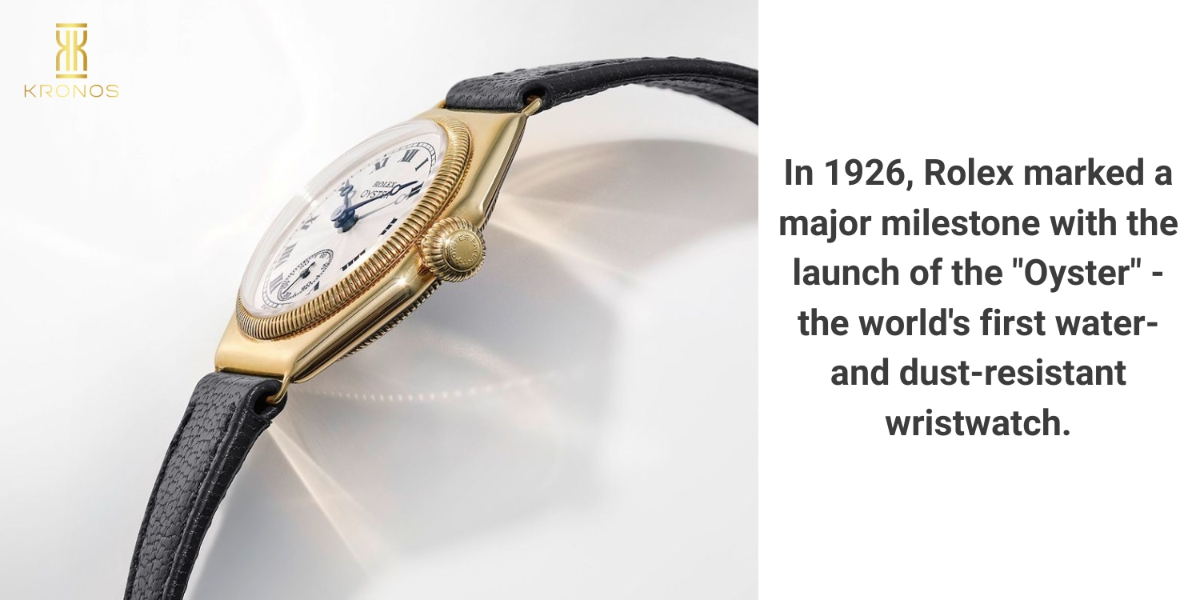
The Oyster case provides optimal protection for the Rolex movement through its water- and dust-resistant construction
Complementing this innovation is 904L stainless steel, a highly corrosion-resistant alloy commonly used in the aerospace industry. The material helps Rolex watches retain their distinctive lustre and polished appearance over time.
Beyond its choice of materials, Rolex’s prestige is also rooted in its vertically integrated manufacturing philosophy. The brand produces nearly all of its components within its own facilities, from movements and cases to bracelets. This closed-loop production model enables Rolex to maintain an exceptionally high and consistent level of quality control.
How can buyers distinguish between Rolex’s legendary collections and choose the right model?
To identify and select the most suitable Rolex collection, buyers should compare each model’s primary functions, materials and intended style of use. Four of the brand’s most representative collections are the Submariner, Cosmograph Daytona, Day-Date and Lady-Datejust.
What specialised functions do the Rolex Submariner and Cosmograph Daytona offer?
Introduced in 1953, the Rolex Submariner established a benchmark for professional diving watches. Its defining features include a rotatable bezel and water resistance to a depth of 300 metres, equivalent to approximately 30 ATM.
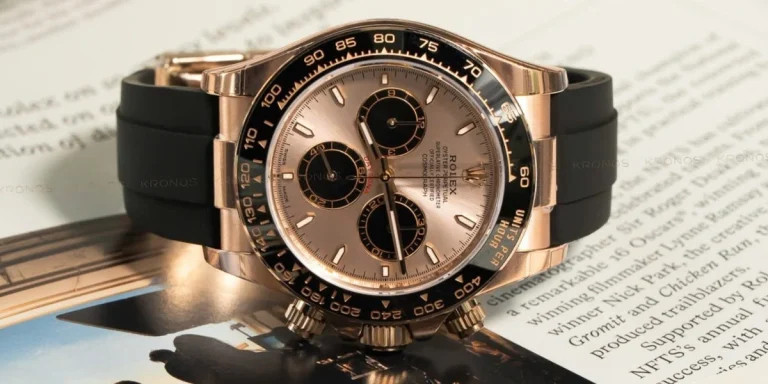
By contrast, the Cosmograph Daytona, launched in 1963, is a sports chronograph closely associated with the world of motor racing. Its subsidiary dials allow the wearer to measure elapsed time with a high degree of precision.
The Submariner’s most important functional feature is its unidirectional rotatable bezel. This mechanism allows divers to monitor their remaining underwater time safely, as the bezel can only rotate in a direction that reduces the indicated dive time.
The design prioritises diver safety in high-pressure underwater conditions. According to Rolex’s historical documentation, many modern Submariner models offer water resistance to a depth of 300 metres, making them suitable for professional diving activities.
The Daytona, meanwhile, was developed for an entirely different environment. Rolex designed the collection for professional racing drivers. Its chronograph function, combined with the tachymetric scale on the bezel, allows the wearer to calculate average speed over a known distance.
These distinct functional purposes have created two separate groups of users, although both collections embody Rolex’s characteristic sporting spirit.
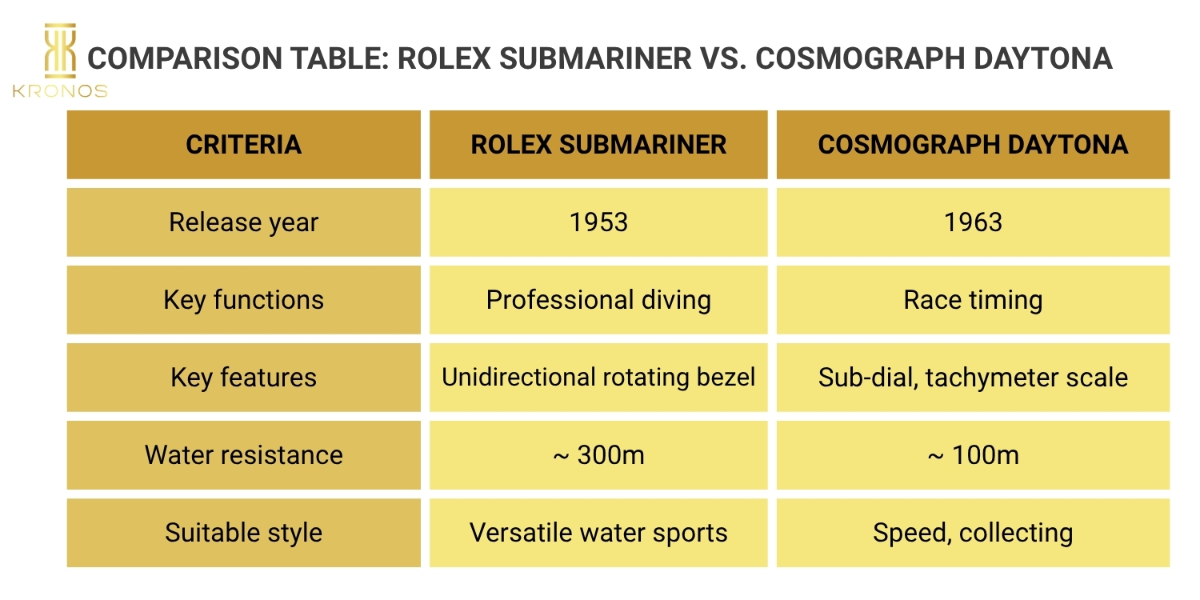
Comparison table of the Rolex Submariner and Cosmograph Daytona
Why is the Rolex Day-Date known as the “President’s Watch”?
The Rolex Day-Date earned the nickname “President’s Watch” because it has been worn by numerous heads of state and influential world leaders since its introduction in 1956.
It was the world’s first wristwatch to display both the date and the day of the week in full and with automatic calendar accuracy directly on the dial. This distinctive combination of technical innovation, precious materials and association with prominent leaders has transformed the Day-Date into an enduring symbol of achievement, authority and timeless prestige.
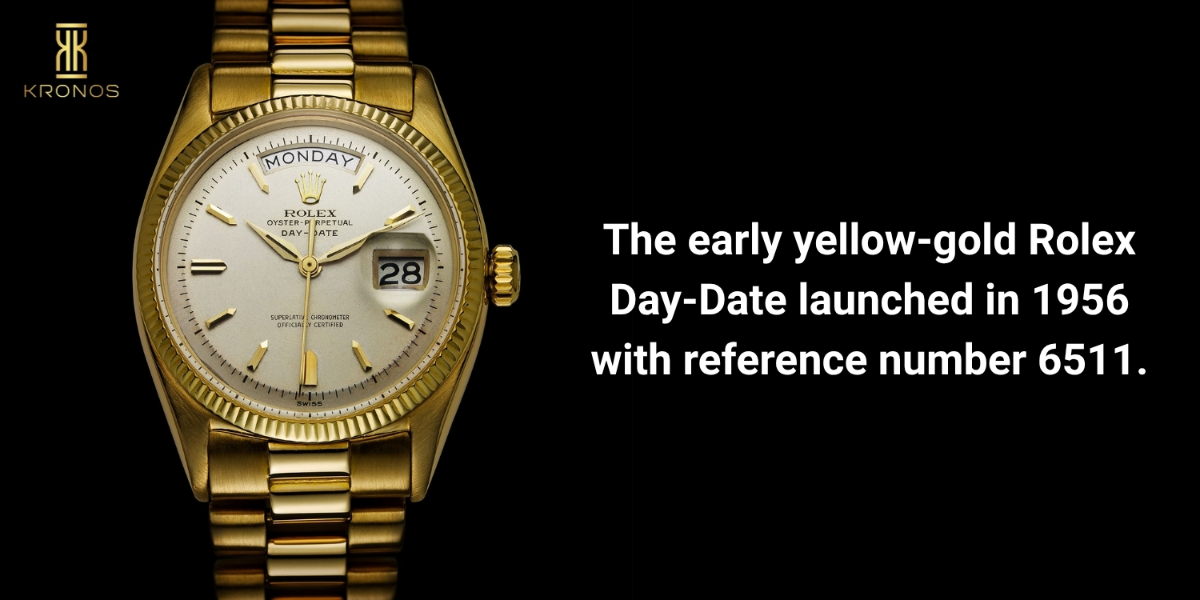
The Day-Date model was launched and became the choice of many influential figures around the world
The defining factor behind the Day-Date’s singular prestige lies in Rolex’s uncompromising approach to materials. The collection is crafted exclusively in solid 18-karat gold or 950 platinum, with no standard steel versions offered.
The watch is also paired with the distinctive President bracelet. Its three-piece semicircular links were designed specifically for the Day-Date, creating a highly refined appearance while providing a smooth, close and seamless fit around the wrist.
Based on observations from the collector market, vintage Day-Date references continue to maintain consistent appeal due to their combination of precious-material value and significant historical heritage.
What are the design and movement features of the Rolex Lady-Datejust?
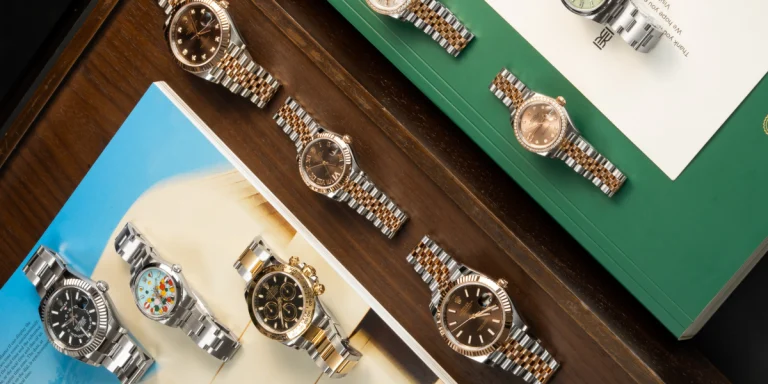
The Rolex Lady-Datejust was introduced in 1957, inheriting the durability and technical reliability of the Datejust collection while reducing the case size to 28 millimetres, approximately the diameter of a VND 5,000 coin, making it particularly well suited to smaller wrists.
The watch is powered by the self-winding calibre 2236, which is automatically wound through the natural movement of the wearer’s wrist and therefore does not require manual winding every day. The movement is complemented by a range of refined design details that reinforce the collection’s elegant character.
From a technical perspective, the Lady-Datejust is equipped with an automatic mechanical movement that generates power through wrist movement. Another familiar feature is the Cyclops lens positioned above the date window. This small, raised magnifying lens enlarges the date display by approximately 2.5 times, making it easier to read at a glance.
The Cyclops lens has become one of the most recognisable design signatures across the Datejust family and is highly valued for its practical contribution to everyday legibility.
From an aesthetic perspective, Rolex offers the Lady-Datejust with refined dials made from natural mother-of-pearl or delicately set with precious stones. Mother-of-pearl creates a distinctive play of light, and because of its natural structure, no two dials are ever exactly alike.
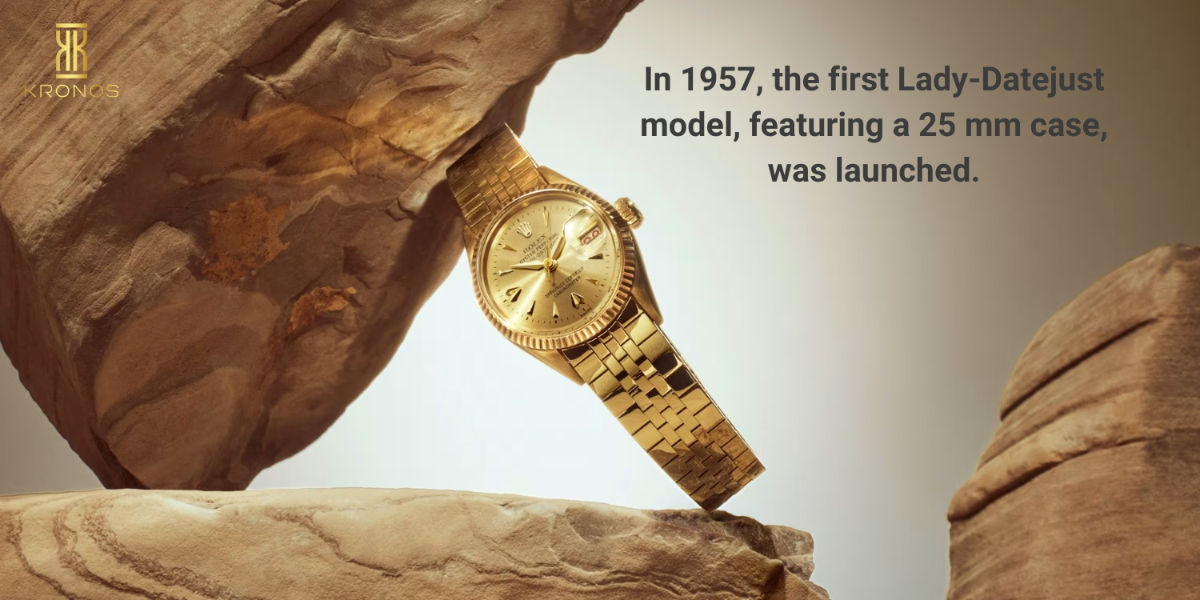
The Rolex Lady-Datejust 28mm features a self-winding movement and an exquisite gem-set dial
Which factors determine the price of a Rolex watch, and how well does it retain its value?
According to research by Kronos Luxury Timepieces, three principal factors determine the price of a Rolex watch: proprietary materials, the complexity of its mechanical movement and the balance of supply and demand in the secondary market.
In terms of value retention, Rolex maintains a significant advantage due to its strong global brand recognition and controlled production volumes.
Which proprietary materials and technologies contribute to the high price of Rolex watches?
The cost of each Rolex watch is shaped by a combination of luxury materials developed in-house and sophisticated mechanical technologies.
In terms of materials, Rolex created its own proprietary Everose Gold alloy, an exclusive form of 18-karat rose gold. Its specialised composition helps preserve the metal’s distinctive pink tone over time, addressing the fading commonly associated with conventional rose-gold alloys.
Another notable innovation is Chromalight, a blue luminescent material designed to improve legibility in low-light conditions. It can provide a continuous glow for up to approximately eight hours.
From a technical perspective, models such as the Yacht-Master II and Sky-Dweller incorporate highly complex mechanisms that are rarely found within the watchmaking industry.
A notable example is the programmable mechanical countdown function of the Yacht-Master II, which allows the wearer to preset a countdown period for use during professional sailing competitions.
Another important component is the Parachrom hairspring. This part is designed to resist magnetic fields and remain stable when exposed to temperature variations, thereby helping the movement maintain reliable precision over time.
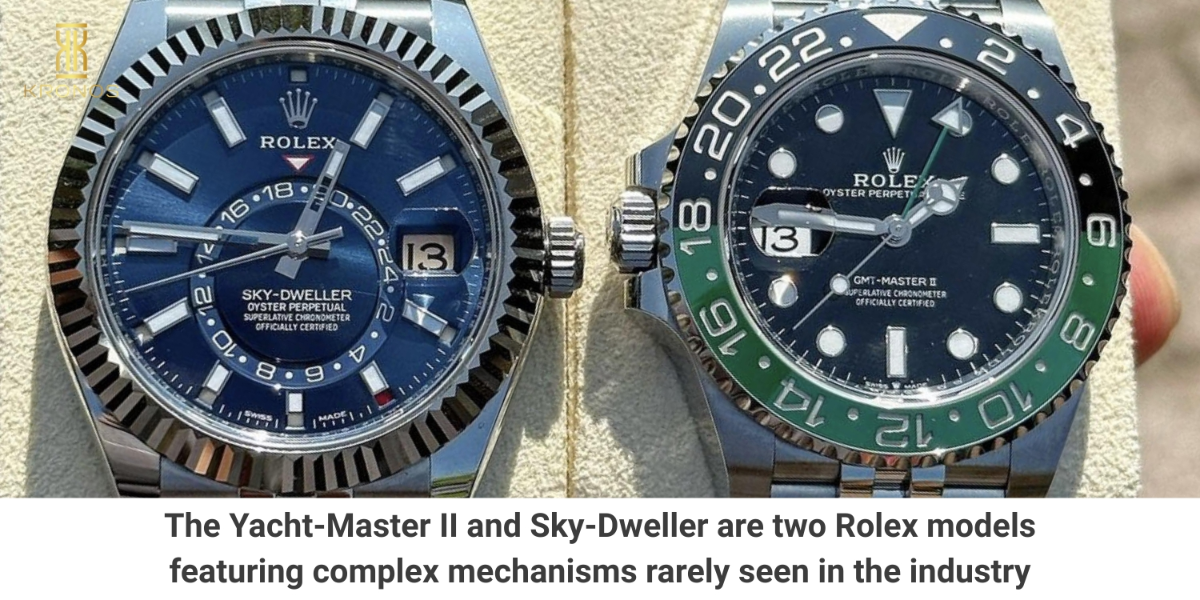
Advanced technical engineering helps Rolex maintain high precision
How does Rolex compare with other swiss watch brands in terms of investment potential?
Among Omega, Patek Philippe and Rolex, Rolex generally holds an advantage in terms of mainstream brand recognition and liquidity in the secondary market.
Each brand has its own distinct strengths. Patek Philippe is highly regarded by serious collectors for its Grand Complications and its heritage dating back to 1839. Omega is particularly renowned for the Speedmaster, the watch associated with the Apollo 11 Moon landing in 1969.
However, liquidity remains one of Rolex’s clearest advantages. Consistent global demand and widespread brand recognition generally make Rolex watches easier to resell than many comparable luxury timepieces.
One notable market phenomenon involves stainless-steel sports models in Oystersteel, such as the Submariner and Daytona. These references may occasionally become difficult to obtain through official retailers. This imbalance between supply and demand can cause secondary-market prices to exceed official retail prices.
Nevertheless, watch values remain subject to market fluctuations, and not every Rolex model appreciates over time. A Rolex should therefore be considered a potential store of value only after careful research, rather than being treated as an asset with guaranteed returns.
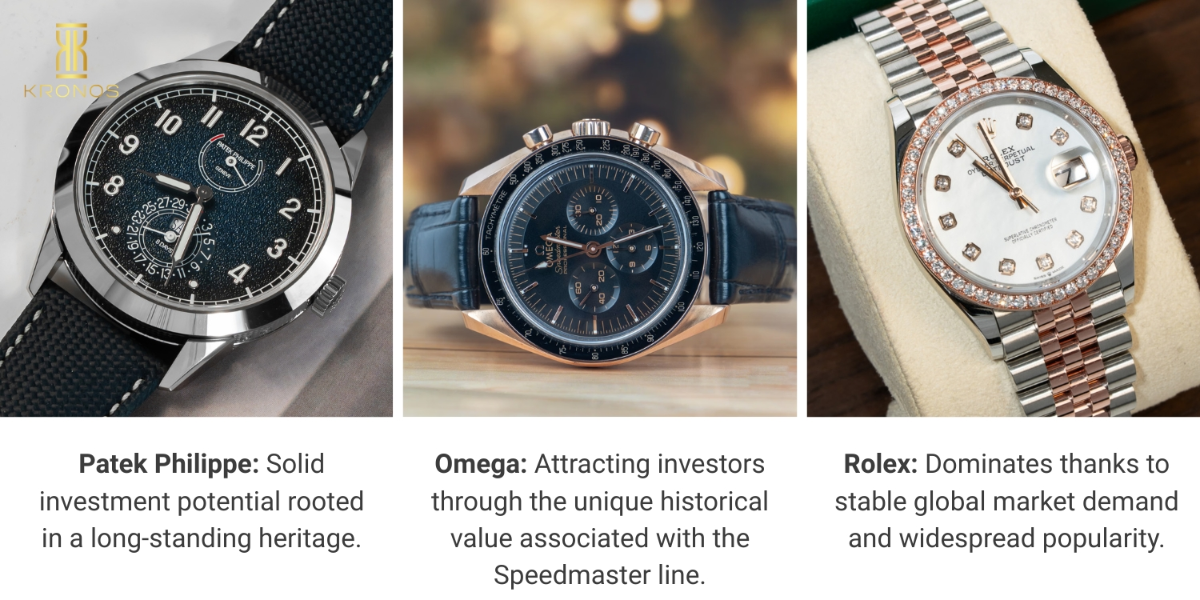
Rolex enjoys high liquidity due to its widespread popularity and immense global demand
What should buyers consider to avoid purchasing a counterfeit Rolex?
To reduce the risk of purchasing a counterfeit watch or a timepiece with substituted components, the safest approach is to buy from an official authorised dealer or a reputable specialist with transparent authentication, warranty and return policies.
In practice, watch experts often encounter so-called “Frankenwatches”—timepieces assembled from components taken from different sources. These watches may contain a mixture of genuine, replacement and counterfeit parts, making careful professional assessment essential.
When examining a Rolex watch, three principal details should be inspected closely.
- The first is the serial number, a sequence of characters engraved according to the brand’s specific standards and used to trace the watch’s original production information.
- The second is the microscopic five-pointed crown logo. Rolex laser-etches this detail into the sapphire crystal at the six o’clock position. Sapphire crystal has a hardness rating of 9 out of 10 on the Mohs scale, providing excellent resistance to scratches.
- The laser-etched crown is exceptionally fine and discreet, making it difficult for counterfeit manufacturers to reproduce with the same level of precision.
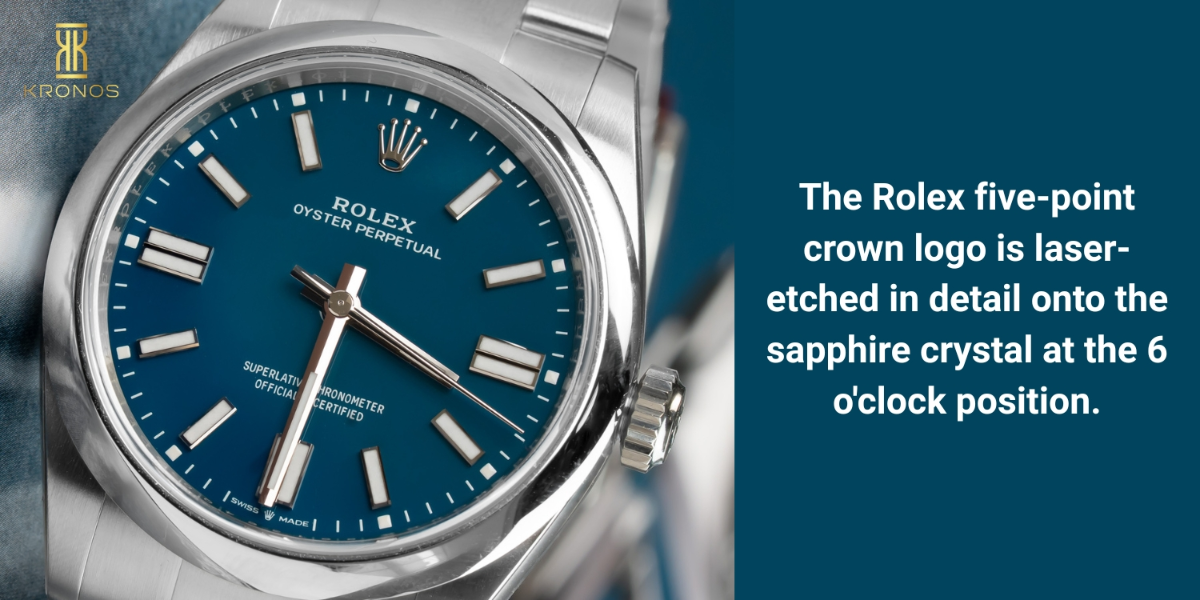 The crown logo on the watch face is one of the details that needs to be checked
Finally, genuine products now come with an electronic warranty card that allows for information verification. Cross-referencing the serial number, laser logo, and electronic warranty card ensures a high level of reliability during the authentication process.
How can the date and time be adjusted without damaging the movement?
One important rule is to avoid adjusting the date during the automatic date-change period, which generally occurs between approximately 9:00 p.m. and 3:00 a.m. During this interval, the movement is already preparing to advance the calendar, so manual interference may cause the mechanism to jam or damage its internal components.
The reason lies in the mechanical construction of the movement. As the watch approaches midnight, the gears responsible for the date change begin to engage in preparation for the transition. Turning the crown to adjust the date during this sensitive period may place excessive pressure on these components, potentially causing small parts to become misaligned or damaged.
A safer method is to first move the hour hand beyond 3:00 a.m. and then proceed with the date adjustment.
Another important habit is to press down and securely screw the winding crown back against the case after every adjustment. This activates the Twinlock or Triplock sealing system, which uses two or three internal gasket zones to create a secure barrier against water and dust.
Although simple, this step plays a critical role in preserving the watch’s water resistance and protecting the movement from external contaminants.
Over more than a century, Rolex has established its position through a combination of historical heritage, vertically integrated craftsmanship and enduring long-term value. From the Perpetual movement and 904L Oystersteel to the proprietary Everose Gold alloy, every component reflects the brand’s consistent commitment to precision, durability and exceptional finishing.
Frequently asked questions about Rolex watches
1. In which country are Rolex watches manufactured?
Rolex is a Swiss luxury watch brand founded by Hans Wilsdorf in 1905, with the Rolex name officially registered in 1908. Although the company began in London, it later relocated its headquarters to Geneva, further strengthening the prestige and credibility associated with every Rolex timepiece.
2. What makes 904L Oystersteel special?
Oystersteel is a 904L stainless-steel alloy known for its high resistance to corrosion and is commonly used in demanding industries such as aerospace.
Compared with conventional stainless steel, Oystersteel helps Rolex watches retain their distinctive lustre over time and provides greater durability against environmental exposure. It has become a signature material across many of the brand’s professional and sports watch collections.
3. What is Rolex Everose Gold?
Everose Gold is a proprietary 18-karat rose-gold alloy developed and produced exclusively by Rolex. Its specialised composition is designed to preserve its distinctive pink tone over time, addressing the fading commonly associated with conventional rose-gold alloys. This exclusive material is one of the factors contributing to the premium value and recognisable aesthetic of Rolex watches.
4. What is a “Frankenwatch” in the Rolex market?
A Frankenwatch is a timepiece assembled from components originating from different sources. It may contain a combination of original, replacement or non-original parts.
Such watches require careful professional assessment because their authenticity, originality and collectible value may be significantly affected. To minimise risk, buyers should prioritise official authorised dealers or reputable specialists with transparent authentication procedures.
At Kronos Luxury Timepieces, every watch undergoes a rigorous assessment process, helping clients purchase or invest in valuable timepieces with greater confidence and peace of mind.